
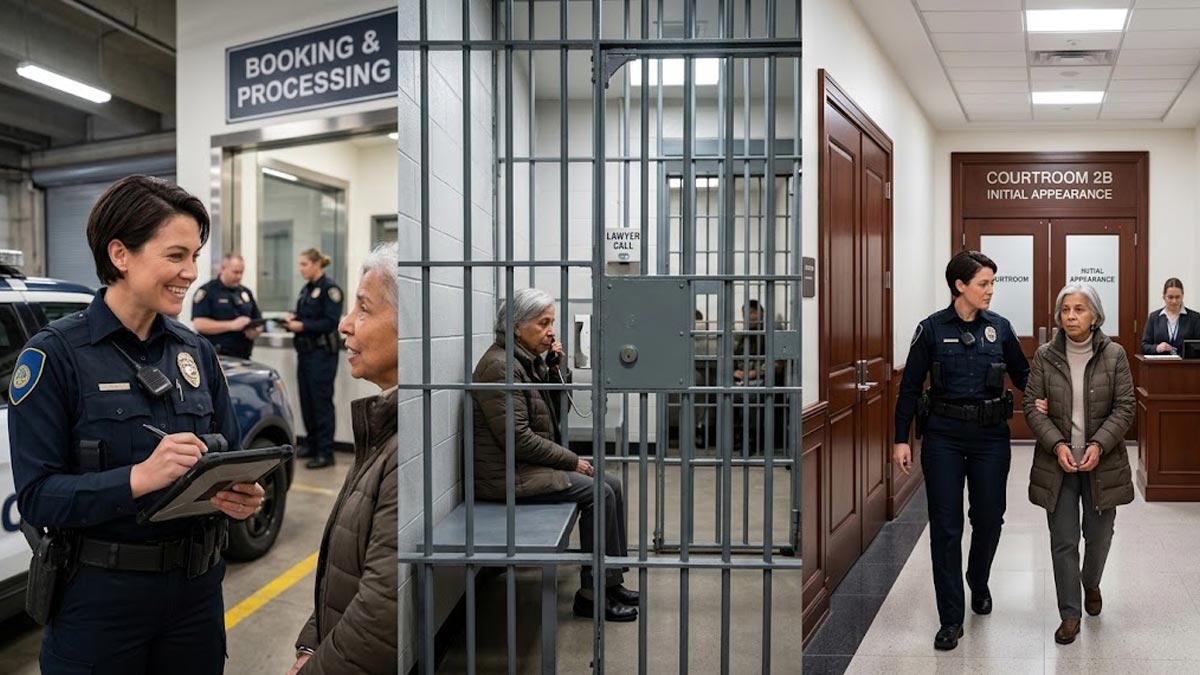
The hours immediately following an arrest are often the most confusing and stressful part of the criminal justice process. While movies make it seem like an arrest leads straight to a high-stakes trial, the reality involves a strict, multi-step administrative procedure governed by tight legal deadlines.
Here is a step-by-step breakdown of what actually occurs behind the scenes from the moment handcuffs go on until a suspect stands before a judge.
1. Booking and Processing
Directly after an arrest, the individual is transported to a local police station or county jail for booking. This administrative process creates an official record of the arrest and typically includes:
- Personal Details: Recording full name, date of birth, and physical characteristics.
- Fingerprinting and Photos: Taking mugshots and running fingerprints through state and federal databases.
- Property Inventory: Confiscating personal belongings (wallet, phone, jewelry) for safekeeping until release.
- Warrant Check: Screening for any outstanding warrants in other jurisdictions.
2. The Holding Cell and Miranda Rights
Once booked, the individual is placed in a holding cell. While law enforcement must inform suspects of their Right to Remain Silent and Right to an Attorney (Miranda Rights) prior to any custodial interrogation, they are given the opportunity to make a phone call to contact a lawyer, a bail bondsman, or a family member.
3. Prosecution Review and Filing Decisions
An arrest does not automatically mean official charges are filed. Law enforcement submits their police reports and evidence to the prosecutor’s office (such as the District Attorney or City Attorney).
A prosecutor reviews the case to decide whether to:
- File Official Charges: Formally charge the individual with specific misdemeanors or felonies.
- Reject the Case: Drop the matter entirely due to insufficient evidence or unlawful arrest.
- Request Further Investigation: Ask police for additional evidence while holding or releasing the suspect.
4. Bail Determination and Pre-Trial Release
Depending on the severity of the offense and local jurisdiction rules, release options may be evaluated before seeing a judge:
| Release Type | How It Works |
| Bail Schedule | Standardized monetary amounts set for minor offenses allowing immediate payment and release before court. |
| Own Recognizance (OR) | Release without financial payment based on a written promise to appear in court, usually for first-time or low-level offenders. |
| In-Custody Holding | For serious felonies or high-flight risks, the individual remains in custody until a judge sets bail at the initial appearance. |
5. The Clock Starts: Strict Statutory Time Limits
State and federal laws strictly limit how long law enforcement can hold someone without formal charges. In most U.S. jurisdictions, an arrested individual must be brought before a judge for their first court appearance within 24 to 48 hours (excluding weekends and legal holidays). If the prosecution fails to file charges within this window, the individual must be released.
The Final Step: The First Court Appearance (Arraignment)
The period ends when the individual is brought to court for their initial appearance or arraignment. During this brief hearing, the judge formally reads the charges, informs the defendant of their constitutional rights, appoints a public defender if necessary, and officially sets, modifies, or denies bail.
Leave a Reply