
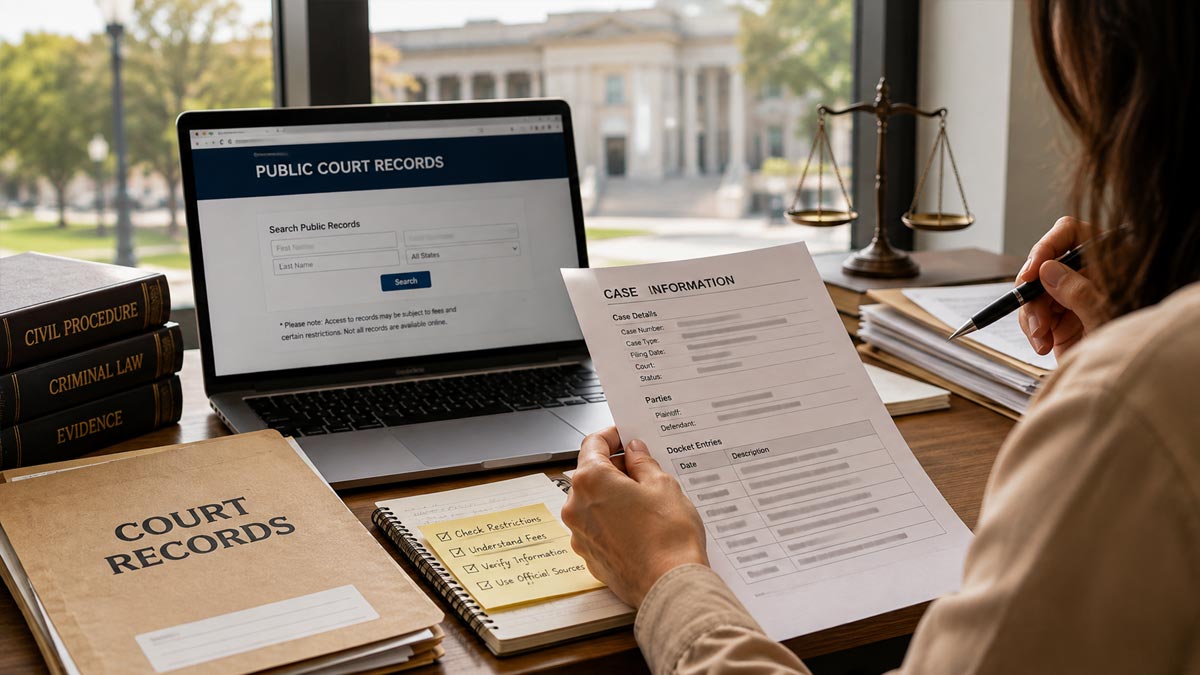
Access to public court records allows citizens to research legal histories, verify background information, or track ongoing litigation. While open government laws make millions of case files accessible online and in person, navigating judicial databases isn’t always straightforward.
Before diving into public record portals, residents should understand how court databases operate, what information is accessible, and the limitations of these searches.
1. Not All Court Records Are Centralized
There is no single, unified database for every legal record in the country. The court system is divided into municipal, county, state, and federal jurisdictions—each maintaining separate databases.
| Court Level | Types of Cases Handled | Common Search Portals |
| County / Municipal | Traffic, minor civil disputes, local misdemeanors | County Clerk of Court websites |
| State District / Superior | Major civil lawsuits, felony criminal cases, family law | State Judicial Branch online portals |
| Federal | Constitutional issues, interstate disputes, federal crimes | PACER (Public Access to Court Electronic Records) |
2. Sealed, Expunged, and Redacted Files Are Restricted
“Public” does not mean everything is viewable. Courts automatically redact or seal sensitive personal information to protect individual privacy and security.
- Confidential Data: Social Security numbers, bank account details, and full birth dates are routinely redacted.
- Sealed Cases: Files involving juveniles, adoption records, trade secrets, or sensitive mental health proceedings are typically hidden from public view by court order.
- Expunged Records: Arrests or convictions that have been legally expunged or erased by a judge will not appear in public index searches.
3. An Arrest or Charge Is Not a Conviction
One of the most common mistakes residents make when reviewing criminal court records is confusing an initial charge with a final disposition. A case file reflects the entire history of a proceeding—from initial filing to final judgment.
- Dockets List Accusations: An open criminal docket simply records that charges were filed.
- Look for Dispositions: Always check the final status (e.g., Dismissed, Acquitted, Guilty, or Plea Bargain). Viewing an active filing as proof of guilt is legally inaccurate and misleading.
4. Common Name Confusion Creates False Positives
Basic public searches rely heavily on name matching. Searching a common name like “John Smith” or “Maria Garcia” can pull dozens—or hundreds—of matching records within a single county.
To avoid misidentifying someone, cross-reference additional identifiers like middle names, date of birth (or birth year), and known addresses tied to the case filing.
5. Access Fees and Copy Charges May Apply
While basic index searches on county or state websites are often free, retrieving detailed documents, docket transcripts, or certified copies frequently incurs fees. Federal systems (like PACER) charge per-page viewing fees, and county clerks often charge nominal fees for official printouts or certified documents.
Using Public Information Responsibly
Public court records are a powerful tool for transparency, but they require careful reading. Verifying the jurisdiction, checking for final case dispositions, and confirming personal identifiers ensures that the information you gather is both accurate and fairly interpreted.
Leave a Reply