
Across the United States, an alarming trend is unfolding along public roadways. Everyday traffic collisions, long treated as routine if unfortunate occurrences, are increasingly ending with one driver speeding away from the scene. What was once viewed as an isolated act of cowardice has evolved into a persistent national public safety crisis.
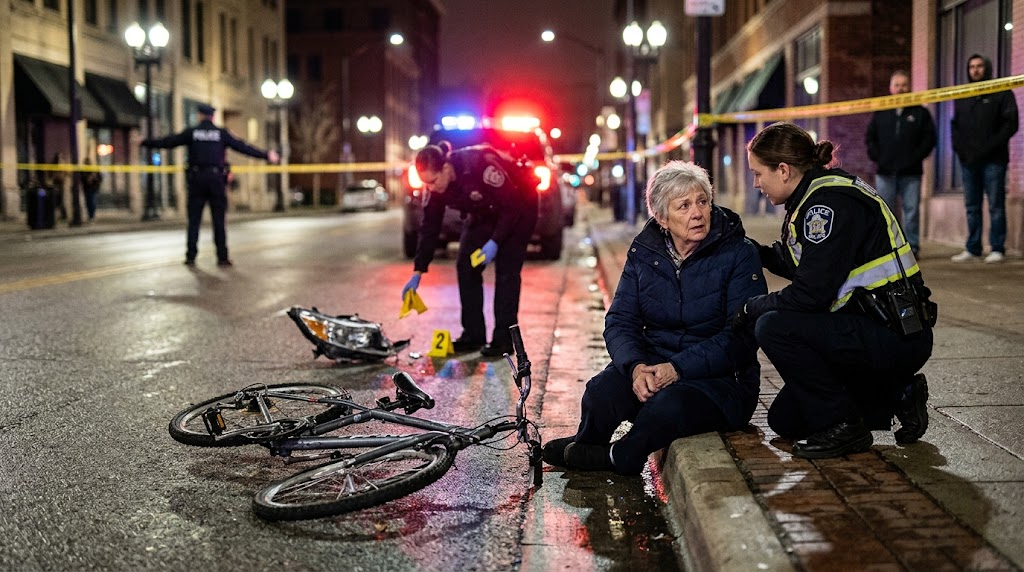
Data from traffic safety organizations and federal transportation registries reveals a troubling pattern: hit-and-run incidents have climbed over the past decade, representing a growing proportion of total traffic crashes and fatalities. According to multi-year research conducted by the AAA Foundation for Traffic Safety, roughly 15 percent of all police-reported crashes involved a driver who fled the scene, marking some of the highest rates recorded in modern traffic monitoring.The human toll is concentrated among the most vulnerable: pedestrians and cyclists account for nearly two-thirds of all hit-and-run fatalities nationwide.
Understanding why drivers choose to flee after a collision requires examining a complex web of behavioral psychology, changing fleet mechanics, roadway design, legal pressures, and systemic law enforcement challenges. The rise in hit-and-run crashes is not a random anomaly; it is the predictable byproduct of how modern vehicles, infrastructure, and social pressures intersect on American streets.
The Psychology of Flight: Fear, Impairment, and Unlicensed Driving
When a collision occurs, the immediate reaction of any driver is shaped by a rapid mix of adrenaline, shock, and cognitive processing. While ethical norms and legal mandates dictate that drivers stop, render aid, and exchange information, a significant subset of motorists makes the split-second decision to flee.
Criminologists and traffic safety experts categorize the motivations behind fleeing into two primary drivers: panic and rationalized evasion.
Panic often dominates in high-stress, low-visibility collisions, particularly when a motorist strikes a pedestrian or cyclist in the dark. The sudden realization of catastrophic injury can trigger an instinctual flight response. However, behind that immediate panic lies a calculated, if reckless, assessment of the consequences of remaining at the scene.
Research into identified hit-and-run drivers highlights several recurring risk factors:
- Unlicensed and Unregistered Drivers:Data from the AAA Foundation indicates that among known hit-and-run drivers involved in fatal crashes, approximately 40 percent lacked a valid driver’s license, and more than half were operating vehicles not registered in their name. For these drivers, remaining at the scene guarantees immediate legal scrutiny, impoundment, or criminal charges independent of who was at fault for the crash itself.
- Substance Impairment: Driving under the influence of alcohol or drugs remains one of the strongest predictors of hit-and-run behavior. An impaired driver faces severe criminal penalties, mandatory license suspension, and potential imprisonment if caught at the scene. Fleeing offers a perverse calculation: if the driver can evade law enforcement long enough for toxicological evidence to dissipate, they may avoid enhanced DUI charges, even if their vehicle is eventually identified.
- Active Legal Jeopardy: Drivers with outstanding arrest warrants, uninsured motorists facing financial ruin, or individuals operating commercial vehicles without proper authorization face immense pressure to abandon the scene.
- Demographic Correlates:Statistical profiles show that identified hit-and-run perpetrators are disproportionately young, male, and frequently crash within a short distance of their own homes or familiar routes, where they perceive a higher likelihood of successful escape.
The decision to flee is rarely based on a belief that the act is morally acceptable. Instead, it is driven by a desperate attempt to avoid immediate, life-altering legal and financial consequences.
The Changing Built Environment and Pedestrian Exposure
The rise in hit-and-run offenses cannot be separated from a broader, well-documented crisis on American roads: the dramatic increase in pedestrian and cyclist casualties. While overall vehicle occupant deaths have shown periods of decline due to advanced airbag arrays and crash-absorption technology, non-occupant fatalities have climbed steadily.
The physical design of modern transportation infrastructure plays a major role in creating environments where hit-and-run incidents thrive.
The Problem of “Stroads” and High-Speed Arterials
A vast majority of fatal hit-and-run crashes occur on multi-lane commercial corridors often referred to by urban planners as “stroads”—hybrid thoroughfares designed to function simultaneously as high-speed arterial roads and commercial corridors. These roadways typically feature wide lanes, high speed limits (40 to 55 mph), minimal street lighting, and sparse crosswalks spaced hundreds of yards apart.
When pedestrians attempt to cross these wide corridors, particularly at night, they are exposed to high-speed vehicular traffic in settings where drivers do not anticipate foot traffic. The combination of high impact speeds and poor lighting significantly increases the severity of injuries while giving drivers ample open asphalt to accelerate away unnoticed.
Temporal Dynamics: The Cover of Darkness
Timing is a critical variable in hit-and-run statistics. Federal crash databases consistently show that hit-and-run fatalities peak during late-night and early-morning hours—typically between 10:00 PM and 4:00 AM.
During these hours, several risk factors converge:
- Ambient light levels are at their lowest point, reducing driver reaction time.
- Witness density drops significantly, lowering the perceived probability that a fleeing vehicle will be identified by bystanders or passing motorists.
- The prevalence of driver fatigue, speeding, and alcohol impairment reaches its daily peak.
In dark, deserted settings, drivers who strike a pedestrian may perceive a low probability of being caught, tilting their split-second calculus toward flight.
Vehicle Fleet Evolution: Size, Weight, and In-Cabin Distraction
While human behavior and road design provide the context for hit-and-run crashes, the physical characteristics of the modern American automobile fleet have fundamentally altered the mechanics of collisions.
Over the past two decades, consumer preferences have shifted decisively away from compact sedans toward larger, heavier light trucks, crossovers, and full-size Sport Utility Vehicles (SUVs). This fleet transformation has introduced two structural factors that contribute directly to the hit-and-run phenomenon: enhanced blind spots and altered crash dynamics.
Frontal Blind Zones and Impact Geometry
Modern SUVs and pickup trucks feature significantly higher hood lines and flatter front grilles than traditional passenger cars. Blind-zone studies conducted by safety organizations demonstrate that the forward blind spot of a full-size pickup or SUV can extend several feet further than that of a sedan, completely obscuring children, wheelchair users, or bent-over pedestrians.
In low-speed settings—such as parking lots, residential intersections, or stop-and-go traffic—a driver in a large vehicle may strike a pedestrian without ever seeing them. Furthermore, the higher mass and sound insulation of modern luxury trucks can muffle the physical feedback of a minor impact. In some instances, drivers claim they were unaware they had struck a human being, mistaking the impact for a pothole or road debris—a defense routinely presented in court.
When high-speed impacts occur, the geometry of a truck or SUV is far more lethal to pedestrians. Sedans typically strike pedestrians at the legs, launching them onto the hood where energy is absorbed. High-riding SUVs strike pedestrians directly in the torso and head, throwing them forward and under the wheels. The resulting injuries are far more likely to be instantly catastrophic, increasing driver panic and accelerating the impulse to flee.
Digital In-Cabin Distraction
Simultaneously, vehicle interiors have become increasingly digitized. Large touchscreen infotainment systems, smartphone notifications, and complex digital dashboards compete for driver attention.
A driver who is distracted by a digital screen for even three seconds at 45 mph travels more than the length of a football field without looking at the road. When a distracted driver collides with a pedestrian or another vehicle, the shock of the sudden impact—occurring without any prior braking or visual preparation—triggers immediate disorientation and panic, frequently leading to a flight response.
Post-Pandemic Driving Behaviors and the Breakdown of Road Norms
Traffic safety researchers widely point to 2020 as a major inflection point in roadway safety. The abrupt reduction in traffic volumes during early pandemic lockdowns led to a sharp increase in extreme speeding, reckless driving, and open non-compliance with traffic laws.
As traffic volumes returned to normal levels, many of those dangerous driving habits persisted. Multi-year data from national safety registries indicates that while total traffic fatalities have stabilized or slightly dropped in select categories, aggressive driving, unrestrained driving, and hit-and-run incidents remain elevated compared to pre-2020 baselines.
Criminologists attribute this shift to an erosion of social norms on public roads. When drivers observe widespread speeding, red-light running, and unpunished minor infractions, the perceived legitimacy of traffic enforcement declines. This broader breakdown in compliance makes severe offenses—such as fleeing the scene of an accident—seem less unthinkable to high-risk drivers.
Investigative Challenges and the Clearance Deficit
For law enforcement agencies, hit-and-run offenses present some of the most difficult cases to investigate and solve. Unlike traditional violent crimes or standard vehicle collisions where both parties remain at the scene, a hit-and-run crime scene offers fleeting physical evidence.
In non-fatal hit-and-run crashes that result solely in property damage or minor injury, clearance rates—the percentage of cases solved by arrest—are notoriously low, often falling below 10 percent in major urban police departments. Facing chronic staffing shortages and high violent crime caseloads, many municipal police agencies lack the investigative resources to assign detectives to non-fatal hit-and-run reports unless clear, high-definition video footage or a full license plate number is provided.
Even in fatal hit-and-run cases, where multi-agency major accident reconstruction teams are deployed, solving the crime requires painstaking forensic work:
- Debris Field Analysis: Investigators must collect tiny paint chips, broken headlight plastic, or shattered glass left on the asphalt, cross-referencing part numbers with automotive databases to identify the make, model, and year range of the suspect vehicle.
- Digital Video Canvas: Detectives canvas nearby businesses, residential video doorbells, and municipal traffic cameras to trace the route of suspect vehicles before and after the collision.
- License Plate Reader Networks: Automated License Plate Readers (ALPRs) mounted on police cruisers and stationary infrastructure have become essential tools, allowing investigators to scan historical traffic data for vehicles matching the suspect profile in the minutes surrounding the crash.
However, if a crash occurs in an unmonitored area at night with no witnesses and minimal vehicle debris, the likelihood of identifying the driver drops precipitously. The widespread knowledge that many hit-and-run cases remain unsolved creates a moral hazard: high-risk drivers believe that if they can successfully clear the immediate vicinity of the crash, the odds of being caught and prosecuted are slim.
Institutional and Policy Responses
Addressing the national rise in hit-and-run incidents requires a comprehensive strategy that spans legislative reform, infrastructure redesign, technology deployment, and law enforcement innovations.
Legislative Reforms and “Yellow Alerts”
State legislatures across the country have sought to close legal loopholes that previously incentivized drivers to flee. Historically, in some state legal codes, the criminal penalties for driving under the influence causing serious injury were harsher than the penalties for leaving the scene of an accident. Lawmakers have increasingly harmonized these statutes, ensuring that fleeing a fatal or serious injury crash carries mandatory felony penalties equivalent to or exceeding aggravated DUI charges.
Additionally, several states and municipalities have introduced “Yellow Alert” systems—modeled after Amber Alerts for missing children. When a serious or fatal hit-and-run occurs, authorities broadcast vehicle descriptions, partial plate numbers, and location data to electronic highway signage, local media outlets, and mobile devices, enlisting the public in real-time suspect identification.
Complete Streets and Infrastructure Redesign
Because hit-and-run fatalities are disproportionately concentrated among pedestrians and cyclists, urban planners are prioritizing physical infrastructure safety through “Complete Streets” initiatives:
- Pedestrian Refuge Islands: Installing mid-block concrete islands that allow pedestrians to cross multi-lane roads in two stages.
- Raised Crosswalks and Traffic Calming: Elevating crosswalks to sidewalk level, physically forcing drivers to reduce speeds at pedestrian conflict points.
- High-Visibility Lighting:Upgrading street lighting to high-output LED arrays at commercial intersections and mid-block crossings to eliminate nighttime blind spots.
- Protected Bike and Pedestrian Lanes: Installing physical barriers—such as concrete bollards or grade-separated paths—to separate non-motorized road users from vehicular traffic.
Vehicle Technology and Automated Detection
Automotive safety regulations are increasingly turning to technology to prevent collisions before they occur and ensure accountability when they do:
- Advanced Automatic Emergency Braking (AEB): Regulatory bodies are mandating that new passenger vehicles feature advanced AEB systems capable of detecting pedestrians and cyclists in low-light and nighttime conditions, automatically applying brakes to prevent or mitigate impacts.
- Automatic Crash Notification (ACN):Modern telematics systems integrated into smartphones and vehicles automatically detect collision forces and transmit GPS coordinates to emergency dispatchers, ensuring that medical aid is routed to victims even if the driver flees.
- Automated Speed and Red-Light Cameras:Expanding automated enforcement networks reduces reliance on physical police stops while providing constant surveillance that deters hit-and-run behavior in high-risk corridors.
Rebuilding Accountability on American Roads
The national increase in hit-and-run crashes is a multi-dimensional crisis that reflects deeper challenges within transportation safety, law enforcement, and social infrastructure. Every hit-and-run represents a breakdown not only of traffic laws, but of the fundamental social contract that governs shared public space.
When a driver flees a crash scene, the immediate consequence is often a delay in emergency medical care for injured victims—a delay that can mean the difference between life and death. For families left behind, the absence of accountability compounds the tragedy, leaving medical bills unpaid and legal closure out of reach.
Reversing this trajectory requires moving past the view that hit-and-run crashes are inevitable individual misdeeds. By combining smarter road design that protects vulnerable users, technological safeguards inside vehicles, strict statutory penalties, and dedicated investigative resources, communities can dismantle the incentives that drive motorists to flee—ensuring that American roadways become safer, more accountable spaces for everyone.
Leave a Reply