
Every day, local law enforcement agencies across the nation generate thousands of official documents, ranging from initial call dispatch logs and traffic collision reports to formal felony arrest dossiers and county jail booking registers. For journalists, legal professionals, insurance adjusters, and private citizens, obtaining these public documents from a local sheriff’s office is a foundational mechanism for transparency, accountability, and legal verification.
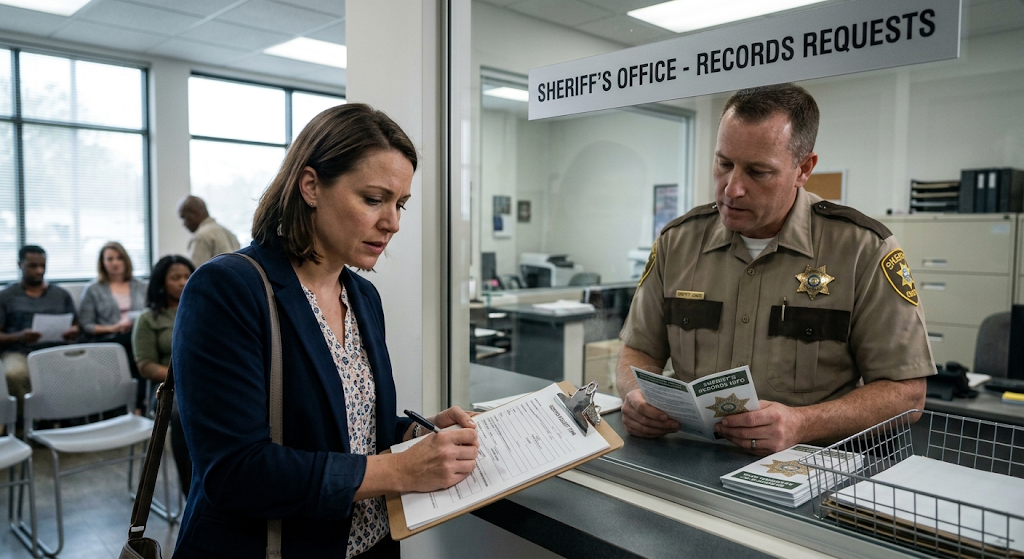
While statutory frameworks such as state open records laws guarantee the public’s right to inspect law enforcement documents, navigating the administrative channels of a county sheriff’s office can present practical challenges. Each county operates under distinct procedural guidelines, fee structures, and disclosure exemptions. Understanding how to draft precise requests, identify the appropriate record custodians, and navigate statutory exemptions is essential for securing law enforcement records efficiently.
Understanding the Authority and Jurisdiction of the Sheriff
To request law enforcement records effectively, requesters must first understand the jurisdictional boundaries of local police entities. Unlike municipal police departments, which enforce city ordinances and investigate crimes strictly within city limits, a county sheriff is an elected constitutional officer whose department holds county-wide authority.
A sheriff’s office typically maintains custody of several distinct categories of records:
- Unincorporated Patrol Records: Incident reports, traffic stops, and crime scene documentation for events occurring outside municipal city boundaries.
- County Jail Operations: Booking logs, mugshots, inmate rosters, visitor records, and facility incident reports for individuals held in the county detention center.
- Warrants and Process Service: Records of criminal arrest warrants, civil summonses, subpoenas, and court orders executed by deputy sheriffs.
- Court Security and Transport: Documentation related to prisoner transportation and security operations within county courthouses.
If an incident occurred within a self-governing municipality, the primary incident report will likely reside with that city’s municipal police department. However, if the suspect was arrested and booked into the county facility, the sheriff’s office will hold the corresponding arrest, booking, and detention records.
Categorizing the Records: What You Can Request
Before submitting a request, it is crucial to identify the exact document type required. Requesting “all records” broadens processing times and significantly increases search fees, whereas naming specific document titles allows records clerks to locate files rapidly.
Incident and Offense Reports
When deputies respond to a 911 call or investigate a reported crime, they author an initial incident report. This document details the date, time, physical location, responding personnel, involved parties, witness statements, and a narrative summary of the initial investigation. Initial incident reports are generally treated as public records once filed, though narrative sections may undergo partial redaction.
Arrest Records and Booking Logs
Arrest records document the formal taking of an individual into law enforcement custody. A standard booking file includes the arrestee’s legal name, age, physical description, booking photograph (mugshot), specific criminal charges, arresting agency, bail amount, and initial court hearing date. Booking logs are typically updated continuously and represent some of the most accessible public law enforcement records.
Computer-Aided Dispatch (CAD) Logs and 911 Recordings
CAD logs provide a digital chronological record of communications between 911 dispatchers and field deputies. These logs capture the exact second a call was received, dispatch times, arrival times, and radio code transmissions. Audio recordings of emergency calls and radio traffic are also public records under most state statutes, though agencies may require additional time to review and redact sensitive personal audio.
Criminal History Checks
Local background checks—often referred to as clearance letters—summarize an individual’s record of arrests and convictions strictly within that specific county jurisdiction. Obtaining a local background check on oneself usually requires submitting fingerprint cards or government photo identification, whereas third-party background requests are governed by strict privacy statutes.
Step-by-Step Guide: Submitting a Public Records Request
While state public records laws—such as the Freedom of Information Act (FOIA) at the federal level, the California Public Records Act, Florida Chapter 119, or the Texas Public Information Act—mandate public access, each sheriff’s office establishes its own administrative intake procedures.
Step 1: Identify the Official Custodian of Records
Every sheriff’s office designates a legal custodian of records, typically housed within a specialized Records Division, Public Information Office, or Civil Process Section. Before drafting a request, visit the official county sheriff website to locate the dedicated records bureau contact details, physical office hours, and preferred submission portals.
Step 2: Determine the Submission Channel
Modern law enforcement agencies utilize several intake channels for public records applications:
- Online Records Portals: Many medium and large sheriff departments utilize digital public record management software (such as NextRequest or JustFOIA) allowing requesters to submit requests, track progress, and download electronic documents directly.
- Email and Mail Submissions: Written requests sent directly to the records clerk via registered email or post provide a verifiable paper trail establishing the legal date of receipt.
- In-Person Intake: Visiting the main sheriff’s office facility or county jail administrative wing allows requesters to fill out standardized paper request forms and pay physical copying fees on site.
Step 3: Draft a Precise, Specific Request
Vague or overly broad requests are the leading cause of administrative delays and outright denials. A well-crafted public records request must contain specific parameters that allow a clerk to identify responsive files without conducting open-ended research.
A high-quality request should explicitly state:
- The statutory authority under which the request is made (e.g., “Pursuant to the State Open Records Act…”).
- Full legal names, dates of birth, or aliases of primary individuals involved (if known).
- Precise date ranges, timeframes, and physical addresses or intersections related to the incident.
- Law enforcement case numbers, incident report numbers, or booking numbers (if available).
- The specific record types sought (e.g., “the initial deputy narrative, body-worn camera footage, and CAD dispatch log”).
- Preferred delivery format (e.g., digital PDF via email or secure download portal).
Step 4: Address Fee Structures and Waivers
State laws generally permit sheriff offices to charge reasonable fees to cover the actual cost of duplicating paper documents, burning media to physical drives, or retrieving archived physical files.
Additionally, many statutes allow agencies to assess labor charges if fulfillment requires extensive search time or complex redaction by IT staff. Requesters should include a cost-cap statement in their initial letter—for example, specifying that the agency must seek prior written authorization if estimated processing costs will exceed $25. Journalists and non-profit researchers should also request fee waivers upfront, citing the public interest value of the requested information.
Legal Exemptions and Statutory Redactions
The right to inspect public records is not absolute. State legislators have established legal exemptions designed to balance public transparency against personal privacy rights, officer safety, and the integrity of judicial proceedings. When a sheriff’s office redacts or withholds a record, it must cite the specific statutory exemption justifying the restriction.
Active Criminal Investigations
The most common ground for withholding law enforcement records is the “active investigation” exemption. If a case remains open, under active deputy investigation, or subject to pending prosecutorial review, the sheriff’s office may withhold investigative narratives, witness contact information, and forensic evidence to prevent compromising the prosecution. Once an investigation closes or court proceedings conclude, these files generally become accessible.
Juvenile Offender Protection
Records involving minors (typically individuals under 18 years of age) are subject to stringent confidentiality protections nationwide. Arrest logs, incident reports, and court filings involving juveniles are automatically sealed or heavily redacted to protect the identity of young offenders, except in rare instances where a minor is formally indicted as an adult for violent felonies.
Personal Identifying Information (PII)
Under statutes such as the federal Driver’s Privacy Protection Act (DPPA) and state privacy acts, agencies must redact sensitive personal data before releasing documents to the public. Clerks routinely strip out Social Security numbers, home addresses, phone numbers, driver’s license numbers, and banking details from public police reports.
Victim Privacy and Sensitive Offenses
Special protections apply to reports involving domestic violence, sexual assault, elder abuse, and child abuse. Law enforcement agencies strictly redact victim names, addresses, medical details, and identifying circumstances to protect survivors from public exposure and safety risks, in accordance with state victim privacy mandates.
Medical and Mental Health Information
Health records generated during incarceration or emergency responses are protected under federal statutes such as the Health Insurance Portability and Accountability Act (HIPAA), alongside state medical privacy laws. Emergency medical service (EMS) notes and county jail mental health evaluations are excluded from general public records release.
Statutory Timelines, Processing Delays, and Follow-Up Strategies
Once a public records request is formally received, statutory timers begin ticking. State laws mandate specific response windows within which an agency must acknowledge receipt, grant access, or issue a formal written denial.
Response deadlines vary widely by state jurisdiction:
- Short Windows (3 to 5 business days): States like Colorado, Georgia, Illinois, and Kentucky enforce rapid acknowledgment and fulfillment deadlines.
- Standard Windows (10 to 15 business days): States like South Carolina, Delaware, and Michigan allow two to three weeks for records personnel to locate and review responsive documents.
- Flexible Standard (“Reasonable Time”): Several jurisdictions do not impose a strict day limit, requiring instead that records be provided within a “reasonable” operational timeframe based on agency workload and case complexity.
When dealing with high-volume sheriff offices or requests requiring extensive body-camera video review, administrative delays are common. Maintaining proactive communication with the assigned records analyst or Public Information Officer (PIO) is often the fastest path to resolution.
If an agency states that fulfilling a request will require weeks of labor, offer to narrow the scope—such as requesting only the preliminary incident report first while allowing additional time for complex media processing.
What to Do If Your Request Is Denied
If a sheriff’s office denies a request in whole or in part, the agency is legally required to provide a written explanation detailing the exact statutory code section justifying the withholding. Requesters have clear administrative and legal avenues to challenge improper denials.
1. Request a Clarification or Partial Release
If an agency denies an entire file based on an active investigation, ask for the immediate release of the unredacted face sheet or initial incident log, which is routinely classified as public even during active inquiries.
2. File an Administrative Appeal
Most state open records frameworks establish an administrative appeal process. Requesters can file a formal appeal with the county attorney, the district attorney, or a specialized state oversight body—such as a Public Records Ombudsman, State Freedom of Information Commission, or the State Attorney General’s Open Government Division. The oversight authority reviews the records in camera (privately) and issues a binding determination ordering release if the sheriff’s office misapplied statutory exemptions.
3. Pursue Judicial Remedies
If administrative appeals fail or an agency refuses to comply with state law, the requester can file a civil lawsuit—often termed a Petition for Writ of Mandamus or Action for Injunctive Relief—in state district court. If the presiding judge determines that the sheriff’s office unlawfully withheld public records, the court can issue a mandatory order compelling immediate disclosure.
In many jurisdictions, statutes mandate that an agency found to have willfully or arbitrarily violated public records laws must pay the requester’s reasonable attorney fees and court costs, alongside administrative fines.
Essential Tools for Navigating Public Safety Records
Securing police reports and arrest records from a local sheriff is a structured legal process governed by established rights of public access. By identifying the correct record custodians, drafting clear requests with specific parameters, anticipating statutory exemptions, and utilizing formal administrative appeals when necessary, citizens, journalists, and legal professionals can effectively navigate local law enforcement bureaucracies.
Maintaining complete records of all correspondence, tracking statutory response dates, and understanding regional open government laws ensures that the public right to inspect government activities remains a functional, enforceable reality.
Leave a Reply