
Every weekday morning in municipal and county courthouses across the country, a familiar scene unfolds. Judges sit before thick dockets, public defenders glance through stacks of case files, and prosecutors review arrest logs. As the bailiff calls out names, a striking pattern emerges: a vast proportion of the individuals appearing before the bench are not first-time defendants. They are familiar faces—individuals who have passed through the doors of the local justice system two, five, or dozens of times before.
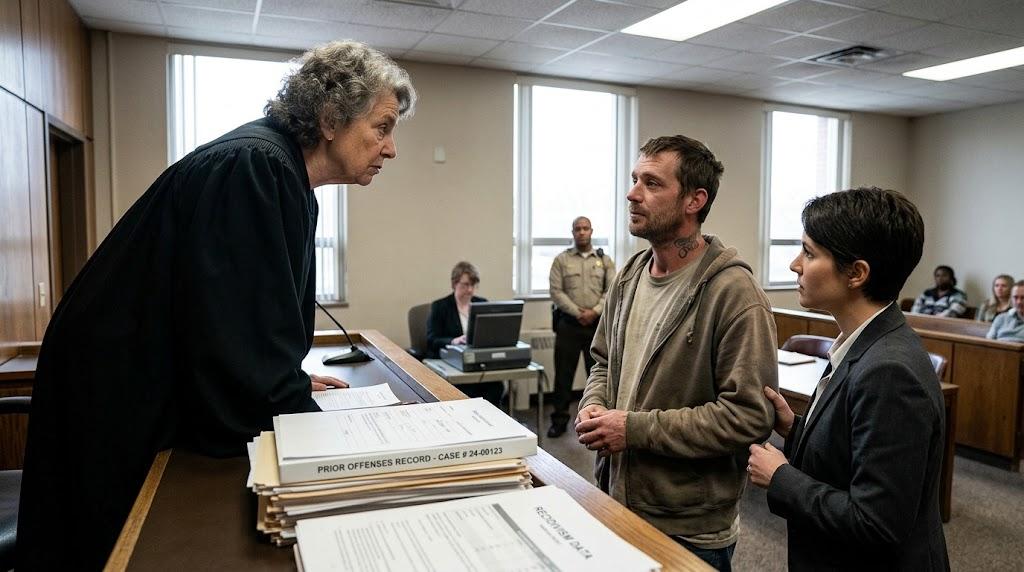
For local court systems, this phenomenon, known legally as recidivism, represents far more than a statistical curiosity. It is the defining operational crisis of the modern judiciary. Repeat offenses clog court calendars, stretch indigent defense budgets to their breaking point, strain jail capacities, and fuel public frustration over community safety.
While state and federal appellate courts deliberate over sweeping constitutional questions and legal precedents, local trial courts are trapped in an exhausting cycle of volume processing. Despite decades of legal reforms, specialized court programs, and changing sentencing philosophies, the revolving door of the court system remains remarkably difficult to close.
The persistence of repeat offending highlights a fundamental disconnect between the intended legal function of a court—adjudicating guilt and imposing punishment—and the complex socio-economic, behavioral, and structural drivers that cause individuals to reoffend.
The Magnitude of the Revolving Door
To understand why repeat offenses pose such an overwhelming challenge, one must look at the structural composition of local court dockets. Unlike high-profile felony trials that capture headlines, the vast majority of judicial business in municipal and district courts involves lower-level offenses: misdemeanors, petty property crimes, public intoxication, minor drug possession, trespassing, and driving with suspended licenses.
Multiple criminological studies and justice system audits reveal that a relatively small cohort of chronic, repeat offenders accounts for a disproportionate volume of local court cases. In many urban and suburban jurisdictions, individuals with five or more prior arrests make up more than half of the daily criminal docket.
This concentration of repeat cases creates severe administrative paralysis. When local courts spend the majority of their time and financial resources re-processing the same individuals for similar low-level offenses, the entire machinery of justice slows down.
Case backlogs grow, trial dates are delayed, and judges are forced to manage caseloads that allow only a few minutes of attention per defendant. Under such operational pressure, the court system naturally moves toward transactional justice—prioritizing swift plea bargains and short-term dispositions over meaningful legal or behavioral interventions.
The Criminalization of Behavioral Health and Addiction
The single greatest driver of repeat offenses in local courts is the systemic failure of external social and health infrastructure. Over the past four decades, local courts have effectively become the primary intake center of last resort for individuals suffering from untreated mental health conditions and chronic substance use disorders.
When community-based mental health clinics, supportive housing facilities, and addiction treatment centers are underfunded or inaccessible, behavioral crises inevitably spill over into public spaces. Local police officers, responding to calls regarding erratic behavior, public disruption, or minor retail theft, have few options other than arrest.
Once an individual with severe mental illness or substance dependence enters the court system, standard judicial tools prove largely ineffective:
- Incarceration as a Temporary Pause: Short jail sentences interrupt public disruption briefly but fail to address underlying psychiatric or physiological conditions. Upon release, individuals return to the same unmanaged environment, leading to swift re-arrest.
- Complex Probation Conditions: Standard probation orders often require defendants to attend multiple mandatory appointments, undergo drug screenings, pay monthly supervision fees, and maintain steady employment. For an individual experiencing severe psychological distress or housing instability, failing to meet these strict administrative requirements is almost inevitable, leading to technical probation violations and immediate re-arrest.
- Co-Occurring Disorders: A significant percentage of repeat court visitors suffer from both mental health disorders and chemical dependency. Few local jurisdictions possess integrated treatment programs capable of addressing both issues simultaneously, leaving defendants caught in a gap between disparate healthcare services.
Judges routinely express deep professional frustration at being asked to solve complex medical and psychological crises using penal sanctions. In the absence of accessible community care, the courtroom becomes a temporaryHolding station rather than a site of resolution.
Collateral Consequences and the Barrier to Re-entry
Paradoxically, the mechanisms designed to penalize criminal behavior often create the exact conditions that make future crime more likely. In legal literature, these secondary hurdles are known as the collateral consequences of conviction.
When an individual is convicted of an offense—even a minor misdemeanor—they trigger a cascade of civil and economic restrictions that severely limit their ability to lead a stable, law-abiding life upon release.
Housing Instability
Public housing authorities and private landlords routinely perform criminal background checks. A prior conviction record, particularly one involving property theft or drug offenses, frequently disqualifies applicants from securing safe, affordable housing. Homelessness and housing instability are among the strongest statistical predictors of re-arrest.
Employment Barriers
A criminal record acts as a significant barrier in the labor market. Many employers automatically reject applicants with prior arrests or convictions, while state licensing boards restrict individuals with criminal records from entering various trades and professions. Denied access to the formal economy, former offenders often turn to informal or illegal income-generating activities to survive.
Legal Debt and License Suspensions
When local courts process cases, they frequently impose mandatory court costs, administrative fees, public defender recoupment costs, and restitution orders. For low-income defendants, these financial obligations can quickly stack up to thousands of dollars. When defendants fail to pay, courts may suspend their driver’s licenses or issue arrest warrants for failure to appear. A suspended license prevents individuals from driving to work legally, leading to a choice between job loss or driving illegally—a gamble that frequently ends in another arrest.
Instead of deterring future crime, these legal and financial obstacles create an economic trap. The harder it is for an individual to secure housing, employment, and transportation after a conviction, the higher the probability that they will revert to criminal behavior.
The Tension Between Deterrence, Punishment, and Rehabilitation
The persistence of repeat offending forces local courts to navigate a fundamental ideological conflict embedded within the justice system: the balancing act between deterrence, retribution, and rehabilitation.
When a repeat offender comes before the bench, the court faces competing pressures from different segments of the community. Victims of crime, neighborhood associations, and local business owners demand accountability, public safety, and immediate deterrence. They argue that allowing chronic offenders to return quickly to the street erodes public trust in the rule of law and leaves communities vulnerable to continuous victimization.
This perspective often leads to calls for stiffer sentences, higher bail amounts, and mandatory minimum sentences for repeat actors. The underlying logic is straightforward: if minor penalties failed to stop the behavior, harsher penalties must be applied.
Conversely, criminological research consistently demonstrates that increasing the length of incarceration for low-level repeat offenders yields diminishing returns for public safety. Short stays in local jails can be highly destabilizing—causing individuals to lose housing, employment, and family connections—while exposing them to anti-social networks that increase long-term criminality.
Local judges are caught in the middle of this policy divide. Imposing maximum jail sentences may offer a community brief tactical relief, but it often guarantees that the individual will return to the community in a more precarious and volatile state. On the other hand, placing a chronic offender on probation without adequate supportive services risks immediate re-offending and public outcry.
The Promise and Limits of Problem-Solving Courts
In an effort to break this cycle, jurisdictions across the world have established specialized “problem-solving courts”—including drug treatment courts, mental health courts, veterans treatment courts, and community justice centers.
These specialized dockets operate on a model of therapeutic jurisprudence. Rather than focusing solely on guilt and punishment, problem-solving courts utilize multi-disciplinary teams consisting of judges, prosecutors, defense attorneys, social workers, and treatment providers. Defendants agree to undergo intensive, long-term judicial supervision, mandatory treatment programs, and frequent drug testing in exchange for having their charges dismissed or sentences reduced.
Data evaluating specialized courts demonstrates clear success:
- Lower Recidivism Rates: Participants who complete drug or mental health court programs reoffend at significantly lower rates than those processed through standard criminal dockets.
- Cost Savings: Keeping individuals out of local jails and emergency rooms generates long-term cost savings for municipal and county budgets.
- Restored Functionality: Wraparound support helps participants secure stable housing, regain employment, and reconnect with family support networks.
However, despite their proven efficacy, specialized courts have not solved the broader crisis of repeat offending due to profound scalability limits.
Problem-solving courts are resource-intensive. They require dedicated social workers, frequent court appearances, small caseloads per judge, and access to subsidized treatment beds. Consequently, these programs can serve only a tiny fraction—often less than 5 to 10 percent—of the eligible repeat offenders passing through a local courthouse. The vast majority of defendants continue to be processed through traditional, high-volume dockets where individualized therapeutic intervention is impossible.
The Ongoing Debate Over Pretrial Release and Bail Reform
In recent years, the debate surrounding repeat offenses has centered intensely on the issue of pretrial release and cash bail reform.
Historically, local courts relied heavily on monetary bail to determine whether a defendant would be detained in jail while awaiting trial. Critics argued that cash bail created a two-tiered system of justice: wealthy defendants could purchase their freedom regardless of risk, while poor defendants remained locked up simply because they lacked financial resources.
In response, numerous jurisdictions enacted bail reforms aimed at eliminating cash bail for non-violent misdemeanors and lower-level felonies, replacing monetary conditions with risk-assessment algorithms and non-monetary supervision.
While these reforms addressed significant civil rights concerns and reduced unnecessary pretrial detention, they faced intense public and political scrutiny when released individuals were re-arrested for committing new offenses while on pretrial release. High-profile incidents involving repeat offenders committing new crimes while awaiting trial have led to fierce debates between legal reformers and law enforcement leadership.
For local judges, managing pretrial release decisions for repeat offenders is a high-wire balancing act. Pretrial detention must respect the constitutional presumption of innocence, yet judges face immense public scrutiny if a released defendant reoffends. Finding reliable, objective methods to evaluate an individual’s real-time risk to public safety remains one of the most contentious technical challenges facing local magistrates today.
Data Science and the Ambiguity of Risk Assessment
To assist judges in making objective decisions regarding pretrial release and sentencing for repeat offenders, many court systems have integrated algorithmic Risk Assessment Instruments (RAIs).
These data tools analyze historical arrest records, age, charge severity, prior failures to appear in court, and substance use indicators to generate a numerical “risk score” predicting the likelihood that a defendant will reoffend or miss a future court date.
While proponents argue that risk assessment algorithms remove human bias and bring scientific rigor to judicial decision-making, critics raise significant concerns:
- Echosis of Historical Bias: Algorithms are trained on historical arrest and court data. In communities that have historically experienced intense police patrols, arrest rates are naturally higher. As a result, the algorithm may interpret localized over-policing as an inherent personal risk factor, assigning higher risk scores to minority and low-income defendants.
- Over-Estimation of Non-Violent Risk: Many risk algorithms group all types of re-arrest together. An individual flagged as “high risk” may simply be highly likely to miss a court date or be cited for driving without a license, rather than committing a violent crime.
- Judicial Reliance: Over-reliance on algorithmic scores can lead judges to make standardized decisions, reducing the individualized consideration that is crucial to addressing the specific root causes of an individual’s repeat offenses.
Data science provides valuable insights into broad population trends, but it cannot replace the complex, human evaluation required to understand why a specific individual keeps returning to court.
Reimagining the Judicial Role: Toward Integrated Systemic Reform
The enduring challenge of repeat offenses makes one truth abundantly clear: local courts cannot solve recidivism in isolation. The courtroom is downstream from every major social, economic, and public health failure in a community. Expecting a local judge to break the cycle of repeat offending through traditional legal proceedings alone is an unrealistic mandate.
Addressing the crisis of repeat offenses requires a fundamental realignment of how local courts interact with broader community infrastructure:
- Pre-Arrest Diversion: Shifting intervention point further upstream by equipping law enforcement officers with alternative pathways—such as Law Enforcement Assisted Diversion (LEAD) programs—that redirect individuals suffering from addiction or mental illness directly to community services before an arrest record is ever created.
- Court-Based Data Integration: Modernizing court technology to connect judicial databases with local housing, public health, and social service platforms, allowing judges and public defenders to identify available treatment beds and community support systems in real time.
- Automatic Record Sealing and Expungement: Expanding clean slate legislation that automatically seals minor, non-violent criminal records after a set period of law-abiding behavior, removing the artificial economic barriers that prevent former offenders from securing stable housing and employment.
- Unified Case Management: Moving away from fragmented, transactional court appearances toward unified dockets where an individual’s multiple low-level legal matters are consolidated under a single judicial team focused on long-term stability.
A Systemic Challenge Requiring Systemic Solutions
Repeat offenses remain the most formidable challenge for local courts because they expose the boundary between the law’s formal authority and society’s complex human realities. A court can issue fines, order probation, and hand down jail sentences, but it cannot independently build affordable housing, treat chronic psychiatric illness, or create stable employment opportunities.
Until justice systems and municipal governments address the underlying structural drivers that push vulnerable individuals back toward illegal behavior, the revolving door of the local courthouse will continue to spin.
Closing that door requires moving beyond a narrow reliance on penal sanctions. It demands that communities view repeat offenses not merely as a series of isolated legal infractions to be processed, but as an urgent signal that the broader social and health safety nets require profound, sustained investment. Only when judicial processes are fully integrated with comprehensive community support can local courts move from merely managing repeat crime to actively preventing it.
Leave a Reply