
Renting out a residential property—whether as a long-term lease or a short-term vacation rental—can be a lucrative investment. However, law enforcement agencies and crime prevention officers routinely note that unvetted tenancies or unmonitored properties can quickly turn into major operational liabilities.
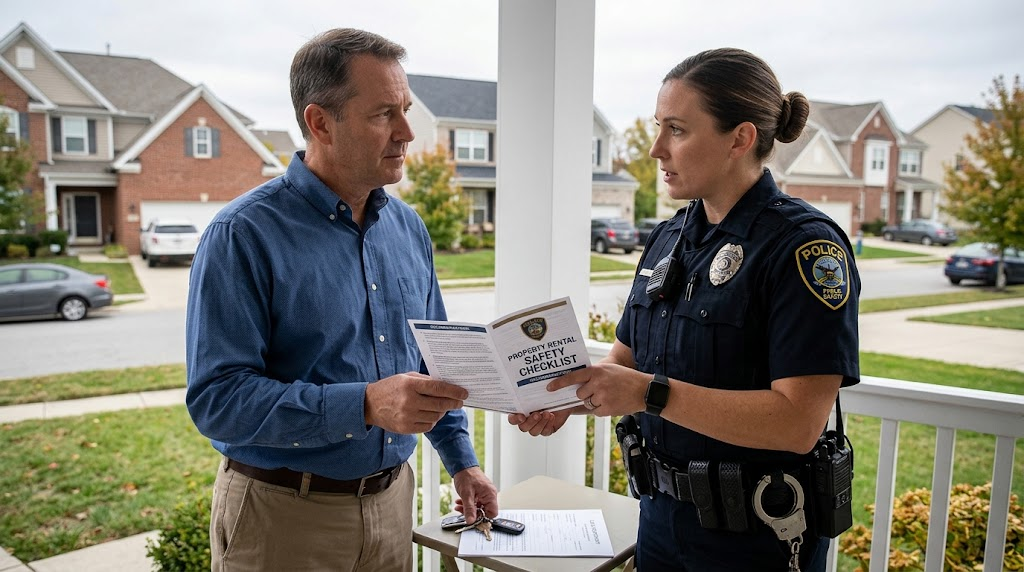
When property managers and landlords fail to exercise due diligence, residential rentals can become targets for lease fraud, illegal subletting, illicit drug operations, squatting, or organized property theft. Beyond physical damage to the home, property owners may face civil liability, municipal fines, and severe devaluation of their real estate asset.
To protect your investment, your neighborhood, and yourself, crime prevention bureaus recommend a multi-layered approach to property management that combines thorough screening, legal safeguards, physical environmental design, and proactive community relationships.
1. Execute Comprehensive Background and Identity Vetting
The first line of defense against rental fraud and property misuse begins during the application phase. Law enforcement officers emphasize that verifying an applicant’s identity and financial history is the single most effective step in preventing illegal activity.
- Verify Government-Issued Identification: Always inspect a physical, government-issued photo ID (driver’s license, passport, or state ID) in person or through verified digital verification platforms. Cross-reference the ID details against the application form to confirm spelling, date of birth, and previous addresses.
- Run Professional Background Checks: Utilize reputable, FCRA-compliant (Fair Credit Reporting Act) tenant screening services to run comprehensive background checks. A thorough screening should evaluate:
- National and State Criminal History: Looking for recent convictions related to property damage, violent offenses, or manufacturing/distribution of controlled substances.
- Eviction Records: Checking civil court records for prior formal eviction proceedings, which often reveal patterns of non-payment or lease violations.
- Credit Reports: Assessing financial responsibility, active collections, or bankruptcies.
- Verify Income and Employment Directly: Do not rely solely on pay stubs provided by the applicant, as digital pay stubs are easily forged. Contact employers directly using independently verified phone numbers (rather than numbers supplied on the application) to confirm income levels and employment status.
- Contact Previous Landlords: Speak directly with prior property managers or landlords—specifically looking two steps back (the landlord prior to the current one), as current landlords may provide favorable references simply to encourage an undesirable tenant to move out.
2. Harden the Physical Property (CPTED Principles)
Crime Prevention Through Environmental Design (CPTED) is a strategic framework recommended by law enforcement agencies worldwide. CPTED principles use physical design to deter potential criminal activity, increase visibility, and make unauthorized entry difficult.
PROPERTY HARDENING CHECKLIST (CPTED)

Exterior Lighting:
  - Install motion-activated floodlights at entryways, driveways, and side yards.
  - Ensure continuous, low-wattage lighting at main entry points overnight.

Landscaping Maintenance:
  - Apply the "3-Foot / 7-Foot Rule": Keep ground shrubs below 3 feet and tree canopies above 7 feet.
  - Eliminate visual blind spots near windows, ground-floor doors, and basement entrances.

Door and Lock Security:
  - Install Grade 1 or Grade 2 deadbolts with at least a 1-inch throw bolt.
  - Reinforce strike plates using 3-inch steel screws anchored into the structural wall studs.
  - Re-key locks or reset digital smart lock PINs immediately between every tenancy.
- Re-Key Locks Between Every Tenant: Never allow a new tenant to move in with locks keyed from a previous tenancy. Consider installing electronic smart locks that allow you to generate temporary digital access codes or audit entry logs remotely.
- Secure Ground-Floor Windows: Ensure all ground-floor windows feature functional, heavy-duty sash locks. Consider adding shatter-resistant window film to ground-floor glass panels located adjacent to door handles.
3. Implement Strict, Legally Binding Lease Agreements
A clear, detailed lease agreement serves as your primary legal enforcement tool if a tenant violates community standards or engages in illegal activity. Law enforcement recommends working with a qualified real estate attorney to include specific safety and operational clauses:
- Explicit Crime-Free / Crime-Violation Clauses: Include a clear provision stating that engaging in or permitting illegal activity on or near the property—including drug distribution, unauthorized firearms discharge, or prostitution—constitutes an immediate, non-negotiable material breach of the lease, initiating formal eviction proceedings.
- Strict Limits on Subletting and Guests: Prohibit unauthorized sublemises, short-term sub-rentals (e.g., Airbnb/VRBO hosting without written consent), and extended guest stays exceeding 14 consecutive days. Unmonitored subletting is a primary driver of party-house complaints and unauthorized occupancies.
- Clear Occupancy Limits: Establish a strict maximum limit on the number of permanent residents permitted in the dwelling, adhering to local municipal housing codes and local occupancy ordinances.
- Explicit Maintenance and Inspection Rights: Retain the legal right to conduct periodic physical property inspections (with proper statutory advance notice, usually 24 to 48 hours) to verify property condition and detect early signs of lease violations.
4. Establish Local Community and Law Enforcement Ties
A property owner who remains completely detached from the local neighborhood is often the last to know when problems arise. Law enforcement officers strongly encourage landlords to build an active local communication network.
THE LOCAL INFORMATIONAL NETWORK

[Property Owner / Manager]
         │
         ├───> Local Neighbors & HOA Board (Early warning indicators)
         │
         ├───> Municipal Crime-Free Housing Coordinator (Local police contact)
         │
         └───> Local Utility & Maintenance Services (Property monitoring)
- Join the Local “Crime-Free Housing Program”: Many municipal police departments offer formal Crime-Free Multi-Housing or Crime-Free Rental Housing certifications. These police-led training seminars teach property owners advanced applicant screening techniques, local crime trends, eviction procedures, and CPTED property security standards.
- Connect with Immediate Neighbors: Introduce yourself to immediate neighbors or the local Homeowners Association (HOA) board before a new tenant moves in. Provide neighbors with your direct phone number and email address, encouraging them to contact you immediately if they observe unusual activity, excessive noise, or physical neglect at the property.
- Register with Municipal Rental Registries: Ensure your property is fully licensed and registered with your city or county housing authority. Many municipalities maintain landlord-notification systems that automatically alert registered property owners when emergency services or police officers respond to a disturbance or crime at the address.
5. Specific Protocols for Short-Term Vacation Rentals
Short-term vacation rentals (STRs) introduce unique public safety challenges, including unauthorized large parties, noise disturbances, overcrowding, and localized property damage. Police departments in high-tourism corridors recommend specialized safeguards for short-term hosts:
- Require Verified Profiles and Guest Identity Documents: Never accept unverified guest bookings. Require the primary booker to submit a valid government ID matching the payment card prior to sending check-in instructions.
- Enforce Minimum Age and Stay Requirements: Consider imposing a minimum age requirement (e.g., 21 or 25 years old) for primary bookers, and set minimum stay durations (e.g., 2-night minimum) during high-risk holiday weekends to discourage short-term party bookings.
- Install Exterior Perimeter Security Devices: Deploy exterior security cameras (such as video doorbells or driveway monitoring cameras) and specialized noise-decibel monitoring sensors inside common areas. Note: Cameras must be strictly limited to exterior entrances/driveways, and noise sensors must monitor volume levels only (without recording audio) to respect guest privacy laws.
- Disclose Rules Explicitly: Post house rules clearly inside the entryway, detailing quiet hours (typically 10:00 PM to 7:00 AM), maximum vehicle parking limits, garbage disposal protocols, and strict “No Unregistered Guests / No Parties” policies with explicit financial penalties for violations.
Protecting Your Investment for the Long Term
Renting out real estate requires balancing commercial hospitality with proactive security management. A passive approach to tenant selection or property maintenance creates vulnerabilities that can lead to costly legal disputes, physical damage, and community friction.
By conducting thorough background vetting, applying CPTED property hardening, maintaining legally enforceable lease agreements, and staying connected with local law enforcement and neighbors, property owners can cultivate a safe, profitable, and low-risk rental environment. Treating property security as an integral part of your management strategy protects not only your financial asset, but also the safety and quality of life of the surrounding community.
Leave a Reply