
In what legal scholars and urban transportation experts are calling a monumental shift in public entity liability, a landmark federal negligence lawsuit has successfully breached decades of governmental immunity, holding major transit authorities directly accountable for failing to implement modern platform safety measures.
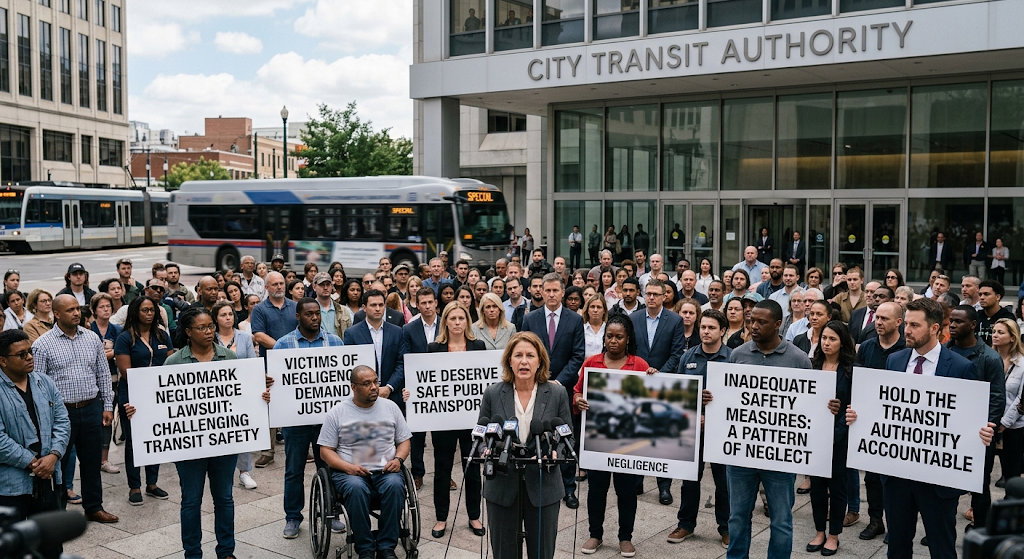
The groundbreaking verdict—which resulted in an $81.7 million award against the Metropolitan Transportation Authority (MTA) and New York City Transit Authority—has sent shockwaves through public transportation agencies across North America and Europe.By ruling that the transit agency demonstrated actionable negligence in failing to install physical platform edge barriers or track intrusion detection systems, the court established a powerful legal precedent that strips public operators of traditional liability shields when known, foreseeable hazards are left unaddressed.
For generations, public transit providers operated under the broad protection of qualified immunity, arguing that decisions regarding infrastructure retrofits, capital expenditures, and safety technology deployments were discretionary administrative choices immune from judicial second-guessing.This landmark decision upends that long-standing legal framework.By demonstrating that transit executives possessed decades of internal data documenting regular track falls and train strikes yet failed to conduct formal feasibility studies or deploy readily available safety solutions, plaintiffs’ attorneys successfully argued that inaction constituted a failure of the agency’s fundamental duty of care.
The ramifications of the ruling extend far beyond the immediate financial judgment.As transit agencies in cities such as Boston, Chicago, Washington D.C., Philadelphia, and London re-examine their own risk exposure, the lawsuit is forcing a comprehensive global reckoning over commuter safety, platform engineering, and the legal obligations of public common carriers.
The Anatomy of a High-Stakes Legal Battle
The legal battle at the center of this precedent stems from a catastrophic incident at the Atlantic Avenue-Barclays Center subway station in Brooklyn, one of the busiest transit hubs in New York City.The plaintiff, Luisa Janssen Harger Da Silva, a young tourist, suffered a sudden medical episode—fainting on a crowded platform—and fell onto the active tracks directly into the path of an incoming subway train.Although the train operator initiated emergency braking protocols, the multi-ton train was unable to stop before striking her, causing severe, life-altering physical trauma that required dozens of surgeries and intensive hospital care.
In traditional personal injury litigation involving train strikes, transit authorities historically defended against liability by focusing on passenger conduct.Defense strategies routinely cited individual medical emergencies, intoxication, accidental stumbles, or third-party pushes as superseding causes of harm, portraying track falls as unavoidable tragedies beyond the operator’s control.
In this case, however, the plaintiff’s trial team pivoted away from individual fault to target systemic, institutional neglect.Through extensive discovery and deposition testimony, plaintiff attorneys unsealed internal agency records revealing a stark operational reality: train-to-person collisions were not isolated, unpredictable anomalies.Internal records demonstrated that individuals fell, were pushed, or ended up on the tracks between two and five times per week across the transit network—a frequency documented continuously since systematic data collection began in the late 1980s.
Despite accumulating thousands of incident reports over several decades, the transit authority was forced to admit under oath that it had never conducted a comprehensive, formal engineering study evaluating how to prevent passengers from falling or being pushed onto the tracks prior to the plaintiff’s accident.Furthermore, evidence presented to the federal jury revealed that the agency had previously received and declined no-cost or low-cost industry proposals to pilot platform screen doors and physical edge barriers.
Faced with this evidentiary record, the Brooklyn federal jury found that the transit agency and the train operator were proximately negligent.The jury concluded that the agency’s failure to evaluate, plan, or implement physical safety measures directly contributed to the catastrophic outcome, setting a historic benchmark for municipal transportation claims.
Piercing the Shield of Qualified Immunity
The most significant legal victory in the lawsuit lies in the federal court’s refusal to grant the transit authority qualified or governmental immunity.
Under statutory and common law traditions, public authorities enjoy discretionary immunity for high-level policy decisions. This legal doctrine was designed to prevent courts from micromanaging government agencies or dictating how municipal entities allocate limited tax dollars across competing public needs. Historically, if a transit authority claimed that installing platform safety barriers was too expensive, logistically complex, or secondary to signal upgrades, courts routinely dismissed negligence lawsuits at the summary judgment stage.
However, the legal doctrine of governmental immunity contains a critical prerequisite: planning immunity applies only when an agency actually engages in a reasonable, deliberative planning process.
In ruling against the transit authority, the court clarified that an agency cannot claim discretionary immunity for decisions it never actually made.Because transit officials failed to conduct formal safety studies, risk assessments, or cost-benefit analyses regarding platform barriers prior to the incident, the agency could not assert that its lack of safety infrastructure was the result of a deliberate, reasoned policy choice.
Legal analysts emphasize that this procedural distinction fundamentally changes the defense playbook for municipal transportation entities:
- The Requirement of Active Deliberation: Transit agencies can no longer rely on passive inaction as a legal defense. To maintain governmental immunity, agencies must prove they actively studied specific hazards and made formal, documented policy decisions based on engineering and financial data.
- Foreseeability as a Legal Trigger:Once internal records demonstrate a recurring, predictable hazard—such as repeated track falls, platform overcrowding, or severe station blind spots—the hazard is legally classified as foreseeable, imposing a heightened duty of care on the common carrier.
- Evidentiary Exposure:Plaintiffs can utilize an agency’s own historical safety logs, internal emails, and ignored consultant recommendations to establish that management possessed actual knowledge of severe risks long before an injury occurred.
This legal shift transforms what was once considered an insurmountable procedural hurdle into a viable legal pathway for injured commuters, signaling to public authorities that bureaucratic inertia carries immense financial risk.
The Global Infrastructure Gap: Platform Screen Doors and Track Sensors
At the heart of the legal debate is a stark technological divide between legacy North American mass transit networks and modern international transportation systems.
Across East Asia and Europe, platform safety infrastructure has been standard operational practice for decades. Transit networks such as the Seoul Metropolitan Subway, Tokyo Metro, Hong Kong MTR, Paris Métro, and London’s Elizabeth Line rely heavily on Platform Screen Doors (PSDs)—full-height or half-height glass partitions aligned with train doors that open only when a train is berthed fully at the station. In systems where full physical screen doors are structurally impractical, transit operators deploy automatic physical platform gates or advanced Track Intrusion Detection Systems (TIDS) utilizing infrared beams, thermal imaging, and artificial intelligence to cut power to incoming trains the millisecond an object breaks the track perimeter.
In cities where full platform screen doors have been deployed, platform-to-track falls and fatal train strikes have been reduced to near zero.
In contrast, major North American transit systems—many constructed more than a century ago—have resisted system-wide platform barrier retrofits, pointing to a complex web of engineering and financial challenges:
- Structural Weight Restrictions: Older, elevated or underground platforms were not structurally engineered to support the heavy vertical loads imposed by full-floor-to-ceiling glass barrier walls.
- Heterogeneous Rolling Stock: Legacy fleets frequently feature mismatched car lengths, varying door placements, and disparate braking profiles, making it difficult to align train doors consistently with fixed platform openings without automated train operation (ATO) signals.
- Severe Financial Costs: Retrofitting legacy subway stations with automated platform screen doors can cost between $10 million and $30 million per station, a capital commitment that transit executives argued would drain funding from basic track maintenance and signal modernization.
However, the landmark trial dismantled the argument that high costs grant public authorities blanket permission to do nothing.Plaintiffs presented expert engineering testimony demonstrating that partial-height fixed metal railings, vertical rope gates, and optical track-intrusion warning sensors represent viable, cost-effective alternatives that can be integrated into legacy stations without massive structural overhauls.
By establishing that feasible, intermediate safety technology was available and deployed elsewhere in the transit industry, the lawsuit shattered the defense that legacy networks are physically incapable of protecting passengers from track hazards.
Systemic Shockwaves Across Public Safety Operations
The legal precedent set by this verdict is triggering an immediate, operational restructuring across public safety, legal, and risk-management divisions in transit agencies nationwide.
In direct response to the mounting legal pressure and multi-million-dollar risk exposure highlighted by the lawsuit, the Metropolitan Transportation Authority initiated a pilot program installing fixed-rail platform barriers and physical gate systems at high-volume stations, alongside testing advanced thermal intrusion cameras.Other major municipal transit providers are rapidly following suit, conducting emergency audits of their platform infrastructure, updating train operator speed restrictions when entering stations, and commissioning formal engineering reviews to insulate themselves from similar litigation.
Municipal insurance underwriters and municipal risk officers are also driving this transformation.Insurance entities that underwrite excess liability policies for cities and regional transportation districts are re-evaluating coverage terms.In light of the federal ruling, risk managers are warning transit boards that failing to document safety studies or ignoring known platform hazards could lead to denied insurance coverage or astronomical deductible increases following catastrophic accidents.
Civil rights advocates and commuter safety organizations have seized upon the verdict as a vital tool for systemic reform. For years, advocacy groups representing individuals with disabilities, senior citizens, and daily riders pushed for platform accessibility and barrier installations, only to be rebuffed by administrative delays and budget constraints. The threat of severe judicial liability has accomplished what decades of public lobbying could not: elevating platform safety from a low-priority capital luxury to an urgent legal necessity.
The Fiscal Dilemma and the Future of Common-Carrier Liability
While safety advocates celebrate the ruling as a victory for passenger rights, transportation economists and municipal finance officers warn that the legal precedent creates a profound fiscal dilemma for urban transit authorities.
Public transportation systems throughout the developed world are navigating severe structural budget crises. Shifts in post-pandemic work patterns, persistent ridership declines, rising operational costs, and aging physical infrastructure have left major transit providers facing structural operating deficits. Municipal leaders caution that if transit systems are forced to divert billions of dollars toward emergency platform retrofits to avoid catastrophic lawsuit awards, funding may inevitably be slashed for basic vehicle maintenance, station cleanliness, frequency of service, or regional route expansion.
Legal scholars counter that the ruling does not impose strict liability or demand that transit agencies eliminate every imaginable risk overnight.Rather, the legal precedent reinforces a fundamental principle of common-carrier law: public operators cannot turn a blind eye to predictable, fatal dangers.Under the established framework, transit authorities remain protected if they engage in transparent, data-driven safety planning, systematically evaluate emerging risk-mitigation technology, and execute clear, prioritized plans to address identified hazards over time.
A New Era for Commuter Safety
The landmark negligence lawsuit represents a watershed moment in the history of public transportation law.By rejecting the notion that public transit agencies are immune from accountability when safety measures lag behind industry capabilities, the court fundamentally redefined the social contract between transit operators and the public they serve.
For the millions of commuters who step onto subway and train platforms every day, the ruling signals a decisive move toward a safer, more accountable urban infrastructure.The decision establishes that passenger safety cannot be treated as an administrative afterthought or sacrificed to bureaucratic convenience.
As transit authorities globally adjust to this new legal landscape, the historic verdict ensures that the duty of care owed to the riding public is no longer defined by traditional administrative discretion, but by a proactive, legally enforceable commitment to protecting human life.
Leave a Reply