
In suburban housing developments, urban apartment complexes, and rural townships across the globe, the iconic metal “Neighborhood Watch” sign—once featuring a stylized silhouette in a trench coat—has quietly become a relic of a bygone era. Today, community vigilance operates not through occasional town hall meetings or scheduled block patrols, but through real-time push notifications, encrypted group chats, ring-fenced social platforms, and crowdsourced public safety applications.
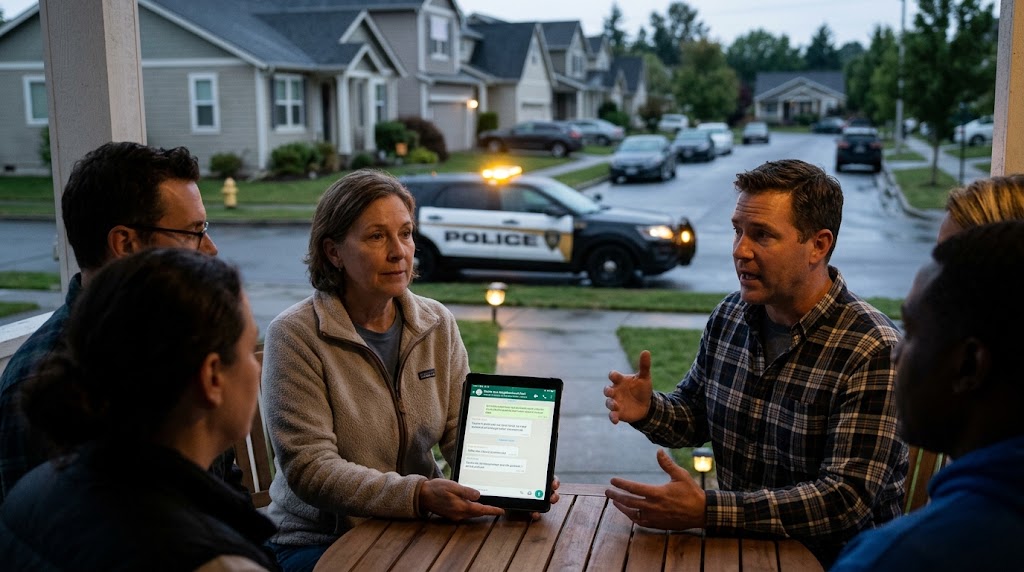
From WhatsApp networks and localized Facebook groups to dedicated platforms such as Nextdoor, Citizen, and camera-sharing networks like Ring Neighbors, digital alert networks have democratized neighborhood surveillance. Tens of millions of residents now hold the power to broadcast unvetted security footage, suspicious activity reports, and license plate numbers to thousands of their neighbors in a matter of seconds.
For law enforcement agencies, this shift presents a double-edged sword of unprecedented proportions. On one hand, digital alert groups serve as a massive, decentralized force multiplier, offering detectives rapid access to high-definition video evidence, eyewitness testimonies, and immediate leads that can crack cold cases in hours. On the other hand, these very same platforms can unleash a flood of low-quality noise, ignite viral digital witch hunts, contaminate eyewitness evidence, and foster dangerous vigilantism that actively undermines formal criminal investigations.
The Operational Win: Crowdsourced Evidence as a Force Multiplier
When an incident occurs—whether a residential burglary, a violent assault, or a child disappearance—the first critical hour often dictates the success of an investigation. Historically, police officers spent days knocking on doors, canvassing neighborhoods, and requesting physical security videotapes from local storefronts.
Today, digital neighborhood alert groups dramatically compress that timeline. When integrated properly into community policing strategies, these networks provide immediate benefits to criminal investigators:
- Rapid Evidence Aggregation: High-definition video doorbells and private exterior cameras capture vast swathes of residential streets. When a crime occurs, residents frequently upload clip footage to local alert groups long before detectives arrive on scene, helping law enforcement identify suspect vehicles, physical descriptions, and escape routes almost instantaneously.
- Accelerated Missing Persons Searches: In time-sensitive cases involving missing children, elderly individuals with dementia, or endangered adults, neighborhood networks allow alerts to disseminate within minutes. Communities can organize coordinated search parties and monitor private property perimeters with an efficiency that municipal police forces alone cannot replicate.
- Geographic Pattern Recognition: Serial petty crimes, such as catalytic converter thefts or package pirating, often go unreported to police due to perceived low urgency. However, when residents post time-stamped footage across alert groups, pattern shifts emerge quickly, allowing police departments to map crime clusters and adjust patrol shifts accordingly.
- Direct Law Enforcement Portals: Many municipal police departments have established official partnerships with digital platforms, creating streamlined portals where investigators can broadcast geo-targeted requests for camera footage following major incidents, bypassing traditional manual canvassing.
In dozens of high-profile cases worldwide, crowdsourced digital footage shared through neighborhood groups has proven decisive. Detectives have used background audio from doorbell cameras to pinpoint gunfire timestamps, identified getaway vehicles from subtle bumper damage spotted by vigilant neighbors, and tracked stolen property across state lines through real-time community updates.
The Deluge of Noise: How Unvetted Information Overwhelms Police
While the potential for rapid evidence gathering is vast, police departments frequently find themselves buried beneath an unmanageable avalanche of unverified data.
The fundamental design of digital alert platforms encourages friction-free sharing. A resident who hears a loud noise at midnight can broadcast a warning to thousands of nearby smartphones without verification, context, or technical corroboration. This low bar for entry creates what criminologists term “information pollution”—a scenario where the volume of incoming tips obscures genuinely valuable investigative leads.
When high-profile crimes dominate local news, neighborhood groups often transform into speculation engines. Well-meaning citizens cross-post unconfirmed police scanner traffic, misinterpret routine emergency service responses, and forward recycled rumors from adjacent neighborhoods.
For investigative teams, triaging this influx requires immense resource allocation. Detectives must spend valuable operational hours chasing down false leads, verifying phantom suspect sightings, and clarifying public misunderstandings generated by viral chat threads. Instead of focusing on forensic analysis or formal interviews, law enforcement personnel are routinely forced into performing real-time public relations and rumor control.
The Danger of Digital Vigilantism and Misidentification
Beyond operational inefficiencies lies a far more perilous consequence of digital neighborhood watch groups: the rise of crowdsourced vigilantism and false public accusations.
When a digital alert group broadcasts a photograph or video of a “suspicious person”—often captured on a low-resolution security camera—the platform’s user base frequently assumes guilt before law enforcement can evaluate the context. In numerous documented instances, innocent individuals have found their faces plastered across local social media networks labeled as burglars, predators, or thieves.
These misidentifications carry devastating real-world consequences:
- Harassment of Innocent Bystanders:Delivery drivers, utility workers, door-to-door solicitors, lost tourists, and unhoused individuals are frequently targeted by neighborhood alert threads. Once an image circulates with a predatory narrative attached, the individual may face physical confrontation, workplace disciplinary action, or public ostracization.
- Physical Confrontation and Escalation: When neighborhood groups foster a heightened state of fear, armed or aggressive residents may attempt to intercept suspects themselves rather than waiting for law enforcement. These encounters risk turning non-violent situations into deadly altercations, endangering both residents and innocent targets.
- Incentivized Bounty Hunting:Certain high-profile public safety apps have historically experimented with crowdsourced bounties, offering financial rewards for users who track down alleged arsonists or suspects based on scanner reports.Such initiatives create immense liability, encouraging untrained civilians to conduct high-stakes surveillance or physical apprehensions.
When civilians attempt to execute police work based on digital alerts, they risk not only personal safety but also the legal integrity of the prosecution. If a civilian illegally detains, assaults, or searches a suspect, defense attorneys can challenge the admissibility of resulting evidence or file civil rights actions that derail the underlying criminal case entirely.
Contaminating Evidence and Compromising Judicial Outcomes
A less visible, yet critically damaging impact of neighborhood alert groups occurs inside the courtroom. The integrity of a criminal prosecution relies heavily on the purity of evidence—specifically eyewitness memory, chain of custody, and unprompted identification.
When a crime occurs in a residential area, neighbors routinely jump into group chats to discuss what they saw. In these unmoderated forums, memory contamination happens rapidly. A witness who originally saw a “dark-colored sedan” may read a chat message where another neighbor insists the car was a “blue pickup truck.” Over time, human memory subconsciously adapts to public consensus. By the time police detectives conduct formal interviews, eyewitness accounts have often been homogenized by group chat discussions, rendering their testimonies far less reliable under cross-examination by defense counsel.
Furthermore, legal challenges arise regarding the chain of custody for digital evidence:
| Challenge | Impact on Formal Investigation | Legal Consequence |
| Video Compression & Editing | Footage downloaded, clipped, or re-recorded from screens via mobile devices lose original file structure. | Defense attorneys can question authenticity, alleging missing context or intentional video manipulation. |
| Metadata Stripping | Social media and messaging apps routinely strip EXIF data (GPS location, camera specifications, original timestamps). | Prosecutors struggle to establish verifiable proof of exact time and place in legal proceedings. |
| Witness Cross-Contamination | Neighbors compare notes and review shared footage before speaking with investigators. | Eyewitness testimony can be discredited in court as polluted by peer exposure. |
| Prejudicial Pre-Trial Publicity | Pervasive local sharing creates a presumption of guilt within the jury pool’s geographic district. | Courts may be forced to grant costly venue changes or dismiss charges due to compromised jury fairness. |
If law enforcement relies on evidence collected through informal digital channels that fail to meet strict judicial standards of custody and authenticity, prosecutions that appear ironclad on social media can collapse during trial.
Profiling, Paranoia, and the Erosion of Community Cohesion
Sociological research into hyper-local alert platforms consistently highlights a troubling trend: digital neighborhood watch groups often amplify systemic biases and generate disproportionate fear of crime.
In many suburban alert forums, reports of “suspicious activity” are heavily skewed by implicit racial, cultural, or socioeconomic biases.Individuals belonging to minority groups who are simply walking through a neighborhood, waiting for public transportation, or resting in public spaces are frequently reported as threats.
This continuous stream of suspicion-driven posts creates what communications scholars call the “mean world syndrome”—a cognitive bias where individuals perceive their immediate environment as far more dangerous than objective statistics indicate.Even in communities where crime rates are historically low or falling, heavy engagement with neighborhood alert apps causes residents to report elevated levels of anxiety and fear.
This persistent paranoia harms local policing efforts in several ways:
- Strained Community Relations:Frequent police dispatches to investigate non-criminal, bias-driven complaints alienate marginalized groups and erode public trust in both neighborhood leaders and law enforcement agencies.
- Resource Misallocation: Police patrols are repeatedly drawn away from high-priority beats to respond to benign false alarms generated by anxious app users.
- Breakdown of Social Cohesion:Instead of building genuine community bonds, platforms that focus exclusively on crime and threat detection foster mutual distrust among neighbors, viewing every outsider with suspicion.
Establishing Best Practices: Balancing Vigilance with Responsibility
The digital neighborhood watch is not going away. As smart home security infrastructure expands and mobile connectivity deepens, crowdsourced public safety networks will remain a permanent fixture of urban and suburban life.
To harness the genuine investigative benefits of these platforms while mitigating their systemic risks, forward-thinking police departments, platform developers, and community leaders are introducing clear boundaries and operational protocols.
Guidelines for Law Enforcement Agencies
Police departments must take an active role in educating the public on how to engage with neighborhood alert groups responsibly. Effective departmental policies include:
- Clear Directives on Reporting Channels: Public safety agencies must continually emphasize that posting on social media or neighborhood apps does not constitute filing an official police report. Citizens should be instructed to contact emergency services or non-emergency dispatch lines immediately before sharing details online.
- Proactive Public Relations and Verification: Law enforcement communications teams should monitor major local alert networks to quickly confirm accurate information, refute viral rumors, and prevent public panic.
- Standardized Evidence Portals: Departments should provide secure, direct submission links where residents can upload raw, uncompressed video files with intact metadata directly to investigative databases.
Responsibilities for Platform Developers and Administrators
Technology companies operating neighborhood platforms have a duty to design software interfaces that discourage vigilantism and bias:
- Strict Content Moderation:Algorithms and human moderation teams must actively filter out vague “suspicious person” reports that lack objective evidence of criminal behavior, preventing platforms from becoming outlets for racial profiling.
- Disarming Gamified Features:Platforms must avoid features that incentivize physical surveillance, live-streamed confrontations, or public bounty hunts.
- Safety & Educational Prompts: Before a user posts an alert, apps should display mandatory pop-ups reminding residents not to approach suspects, take the law into their own hands, or broadcast unverified personal identifying information.
Guidelines for Community Members
For everyday citizens, participating in a neighborhood alert group requires discipline and awareness. Responsible engagement means using digital platforms to share verified, actionable facts rather than emotional speculation.
Residents should refrain from uploading clear photos of individuals unless an active crime has occurred and law enforcement has requested public assistance. Crucially, community members must remember that digital vigilance is meant to support—not replace—professional public safety officers and constitutional legal processes.
The Path Forward
Digital neighborhood alert groups represent one of the most powerful public safety evolutions of the twenty-first century. They have rewired how communities communicate, exposed hidden criminal patterns, and provided law enforcement with a deep reservoir of visual evidence.
Yet, left unchecked, the technology threatens to replace collaborative civic safety with fear, paranoia, and digital mob rule. The ultimate success of crowdsourced vigilance depends not on the sophistication of camera sensors or the speed of mobile networks, but on the responsibility of the human beings behind the screens. Only through deliberate partnership, clear legal boundaries, and responsible digital citizenship can communities ensure that neighborhood alert networks help solve crimes rather than create them.
Leave a Reply