
Across municipal hall chambers, public auditoriums, and neighborhood association meetings, the annual civic ritual of local budget hearings has transformed into one of the most contentious battlegrounds of municipal governance. At the center of the debate is the allocation of local tax dollars to police departments—a line item that routinely constitutes the single largest discretionary expense in municipal budgets.
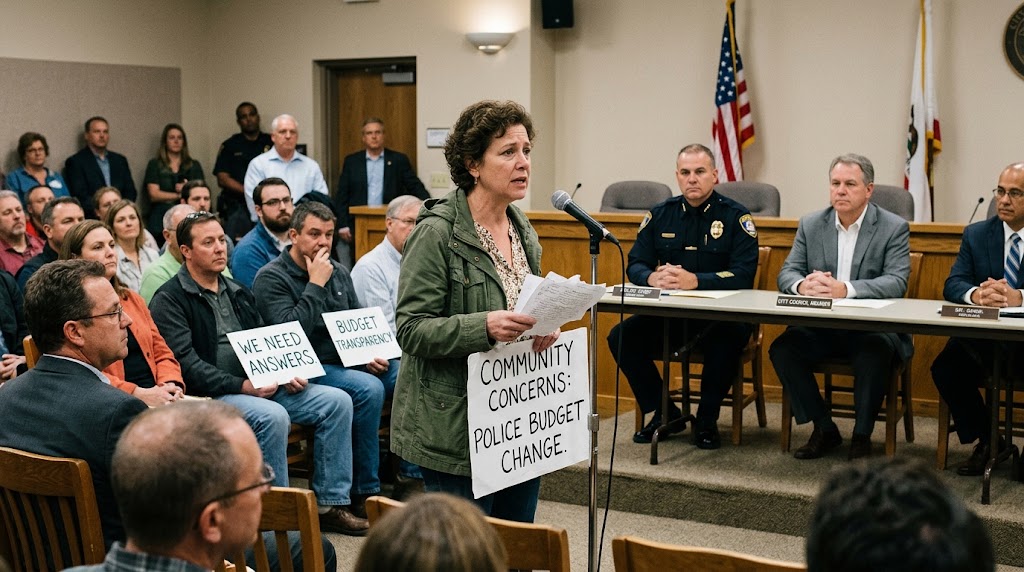
As city councils across the nation debate proposed adjustments to law enforcement funding, local residents are stepping forward in unprecedented numbers to voice sharply conflicting concerns. For some community members, proposed budget freezes or funding diversions threaten neighborhood security, emergency response times, and police retention during an era of persistent staffing shortages.For others, continued increases in police spending represent a missed opportunity to address the root causes of crime through investments in mental health crisis response, affordable housing, youth programs, and community infrastructure.
The intensity of these public hearings underscores a fundamental reality: municipal budgets are not merely accounting documents. They are moral and strategic statements that reflect how a city defines public safety, balances fiscal constraints, and distributes public resources across its population.
The Catalyst Behind Fiscal Realignment
The current wave of municipal budget friction is driven by a complex convergence of economic, political, and social forces. Following several years of volatile tax revenues, high inflation, and the expiration of federal pandemic-era stimulus funds, municipal finance officers are confronting stark fiscal choices. Cities are facing rising operational costs across all municipal services, from sanitation and public transit to road maintenance and civil infrastructure.
Concurrently, police departments are grappling with structural financial pressures of their own. Rising healthcare costs, escalating pension obligations, contractual wage increases negotiated to combat recruitment crises, and the growing expense of specialized technology—such as body-worn camera storage, digital forensics, and non-lethal equipment—have pushed law enforcement operating expenditures to historic highs.
When local administrators present budget proposals, any recommended shift—whether a spending reduction, a funding freeze, or a significant budget expansion—triggers immediate scrutiny from residents across the socio-economic spectrum.
A Divided Community: Diverse Concerns Across Neighborhoods
Public commentary during municipal budget sessions reveals a deep ideological and practical divide among residents regarding what makes a community safe. Rather than a singular public opinion, local leaders are confronted with distinct, competing perspectives.
Fears Over Emergency Response Times and Neighborhood Security
In many residential neighborhoods and high-density commercial corridors, community members express profound anxiety over proposed cuts or restrictions to police funding. Residents frequently cite concerns regarding priority emergency response times, public visibility, and law enforcement deterrence.
- Response Time Delays: Business owners and neighborhood watch organizers often point to instances where 911 calls for property crimes, vehicle break-ins, or commercial disturbances experienced long dispatch delays due to low officer staffing levels on active shifts.
- Commercial Corridor Stability:Small business associations argue that a visible police presence is essential for maintaining foot traffic, preventing retail theft, and ensuring economic vitality in urban business districts.
- Officer Burnout and Safety: Family members of law enforcement personnel highlight that underfunding departments exacerbates dangerous workload burdens, forcing officers to work mandatory double shifts that impair judgment and elevate job stress.
Calls for Investment in Root-Cause Prevention and Social Services
Conversely, community advocates, public health experts, and civil rights organizations present a fundamentally different vision for public safety.These groups argue that decades of prioritizing law enforcement budgets at the expense of social infrastructure have failed to produce long-term community stability.
- Reallocation to Social Safety Nets:Residents advocating for budget reallocations maintain that addressing housing insecurity, substance abuse disorders, and youth unemployment is far more effective at preventing crime than reactive police patrols.
- Decriminalizing Social Crises: Public health advocates stress that law enforcement officers are routinely dispatched to situations they are not trained to resolve, such as non-violent mental health crises, homelessness complaints, and severe psychiatric breakdowns.
- Equitable Resource Allocation: Representatives from historically marginalized communities frequently emphasize that heavy police expenditures often coincide with chronic underinvestment in local public parks, libraries, street lighting, and community centers.
Fiscal Scrutiny from Taxpayers and Commercial Districts
A third vocal constituency consists of taxpayer advocacy groups and property owners focused on fiscal responsibility and transparency. These residents question whether continuous budget increases yield measurable improvements in crime reduction or public satisfaction.
- Overtime Expenditure Audits:Taxpayers frequently demand independent audits of police overtime spending, pointing out that unmanaged overtime repeatedly causes police departments to exceed their voter-approved annual allocations.
- Return on Investment Metrics:Civic budget watchdogs advocate for evidence-based budgeting, demanding that law enforcement agencies present clear performance metrics—such as case clearance rates and community trust surveys—before receiving additional funding expansions.
The Operational Realities: Staffing Crises, Overtime, and Technology Costs
Inside police departments, police chiefs and command staff contend that budget allocations directly govern operational viability. Law enforcement executives maintain that budget adjustments cannot be viewed in isolation from the nationwide staffing crisis impacting public safety agencies.
Across many medium and large municipalities, police departments are operating significantly below their authorized sworn officer strength. When departments cannot recruit sufficient personnel to fill vacant positions, they are forced to rely on mandatory overtime to maintain basic precinct patrol coverage. This operational reality creates a costly financial feedback loop:
- Vicious Recruitment Cycles: Staffing deficits increase the operational burden on remaining officers, driving burnout and voluntary resignations.
- Surging Overtime Budgets:To cover vacant patrol beats, departments pay premium overtime rates, causing personnel line items to balloon beyond original projections.
- Capital Budget Displacement: Unbudgeted overtime costs frequently force administrators to delay deferred maintenance on police facilities, postpone vehicle fleet replacements, or trim specialized training programs.
Furthermore, modern law enforcement requires substantial ongoing investments in digital infrastructure. Requirements for cloud storage of high-definition body-worn camera footage, digital evidence management systems, licensing for automated license plate readers, and cyber-security defenses represent millions of dollars in fixed, non-negotiable annual costs. Police leaders argue that flat or reduced budgets force difficult trade-offs between maintaining technology mandates and keeping officers on the street.
Alternative Public Safety Frameworks: Co-Responders and Civilian Units
In response to public demands for reform and the practical realities of police staffing shortages, many local governments are experimenting with alternative public safety models designed to optimize budget efficiency.
The Co-Responder Strategy
Co-responder programs pair sworn police officers with licensed mental health clinicians or social workers when responding to 911 calls involving psychiatric distress, substance overdose, or behavioral health emergencies. Proponents highlight that this model reduces unnecessary arrests, decreases emergency room admissions, and allows officers to return to high-priority calls more quickly.
Unarmed Civilian Response Teams
Several forward-thinking municipalities have established entirely separate civilian crisis response divisions housed outside the police department. These unarmed teams respond directly to non-violent behavioral health calls, welfare checks, and homeless outreach requests. By diverting thousands of non-criminal calls away from the police dispatch queue, cities aim to reduce law enforcement workloads while providing specialized care to individuals in crisis.
Civilianization of Non-Emergency Duties
To maximize the impact of budgeted sworn officers, municipalities are increasingly civilianizing administrative and non-emergency tasks. Hiring civilian technicians to handle routine crime scene processing, traffic control, non-injury accident reporting, and administrative intake allows departments to keep sworn officers focused strictly on violent crime suppression and emergency response.
Civic Friction at City Hall: Public Hearings and Transparency Demands
As budget deliberations near final votes, public hearings at city halls often turn tense. Residents from opposing viewpoints pack council chambers, holding signs, delivering emotional public testimony, and organizing petition drives.
This heightened civic engagement has exposed significant flaws in traditional municipal budgeting processes:
- Lack of Early Public Input:Historically, municipal budgets were drafted behind closed doors by administrative staff and presented to the public only weeks before final adoption, leaving little room for meaningful community feedback.
- Opaque Budget Categories: Law enforcement budget documents are frequently criticized for lacking line-item clarity, grouping multi-million-dollar allocations under broad headings like “Special Operations” or “Administrative Services.”
- Equity Gaps in Civic Access:Public hearings held during weekday work hours or without language translation services often exclude working-class residents and minority communities most directly impacted by public safety policies.
In response, a growing number of cities are adopting participatory budgeting frameworks and interactive online financial portals.These tools allow residents to explore line-item spending, model the financial impacts of proposed tax changes or spending shifts, and submit direct feedback to city council members before budget blueprints are finalized.
Strategic Imperatives for the Future of Municipal Public Safety
The escalating debate over police department budgets reflects a broader, necessary evolution in how communities evaluate law enforcement, public health, and municipal priorities.
Moving forward, successful municipal administration will require bridging the divide between competing public safety visions. Rather than treating public safety budgeting as a zero-sum political battle between police funding and social services, local governments must focus on comprehensive, data-driven public safety ecosystems.
Effective municipal public safety budgeting depends on key strategic pillars:
- Rigorous Data Integration:Coupling law enforcement crime data with public health metrics, housing data, and 911 call analysis to ensure funds are allocated based on proven community needs.
- Uncompromising Fiscal Transparency:Publishing clear, accessible breakdowns of police personnel costs, overtime expenditures, capital projects, and equipment contracts prior to public comment windows.
- Diversified Response Capabilities:Building robust, well-funded civilian alternative response infrastructure alongside modern, professionally trained law enforcement agencies.
- Continuous Community Dialogue:Institutionalizing year-round public safety forums rather than limiting civic participation to annual high-stakes budget votes.
City councils facing difficult fiscal decisions must recognize that public safety cannot be achieved through law enforcement spending alone, nor can it be sustained without effective emergency response capability.By listening to the legitimate concerns of all neighborhood residents, municipal leaders can construct balanced, transparent budgets that safeguard public safety while investing in the long-term well-being of the entire community.
Leave a Reply