
For decades following the violent crime peaks of the early 1990s, motor vehicle theft and armed carjacking followed a steady downward trajectory across North America and major metropolitan regions worldwide.The widespread adoption of computerized engine immobilizers, transponder keys, and sophisticated alarm systems rendered traditional hotwiring nearly obsolete, significantly raising the technical barrier for vehicle theft.
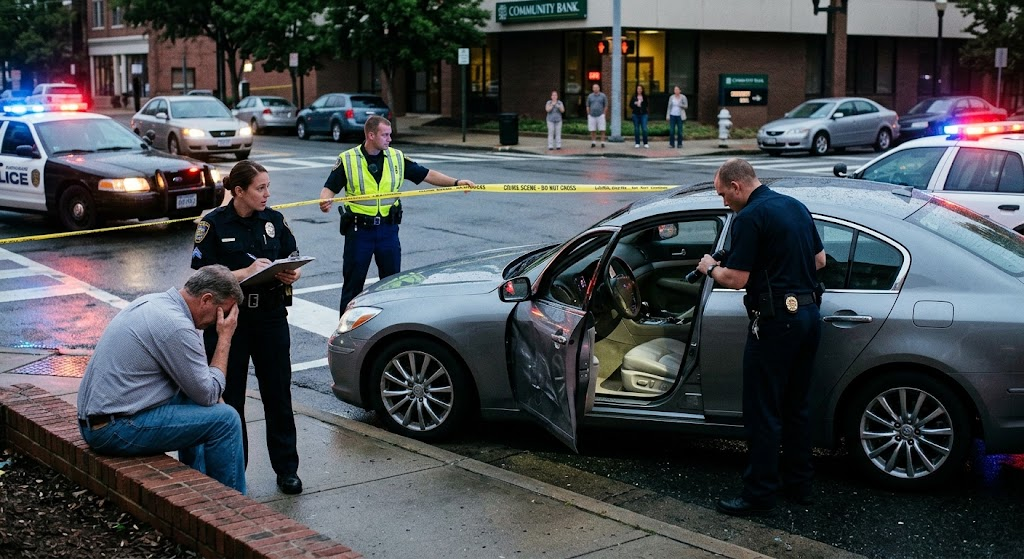
However, law enforcement data from the Federal Bureau of Investigation (FBI), the Bureau of Justice Statistics (BJS), and municipal police departments reveal a sharp, violent disruption to that long-term trend.Beginning in 2020 and persisting through recent years, law enforcement reports documented an unprecedented surge in carjackings—defined legally as the theft or attempted theft of a motor vehicle directly from a person by force, threat, or intimidation.
While the most recent crime updates from nonpartisan research institutions like the Council on Criminal Justice (CCJ) indicate that targeted police interventions and task force operations have begun to lower incident counts from their mid-decade peaks, official records show that carjacking rates remain elevated compared to pre-2020 baselines in many urban centers.
An analysis of law enforcement incident reports, federal crime databases, and criminological studies offers a comprehensive look at the mechanics behind the rise in carjackings, highlighting a stark demographic shift toward youth involvement, the heavy presence of firearms, the role of social media, and the tactical arms race between police departments and offenders.
The Statistical Arc: Tracking the Surge
Understanding the carjacking surge requires distinguishing it from general motor vehicle theft. While standard auto theft involves taking an unattended vehicle, carjacking is categorized as a violent crime—a specialized subset of robbery that carries a direct, physical threat to the victim.
According to data compiled through the FBI’s National Incident-Based Reporting System (NIBRS) and municipal police tracking portals, reported carjackings began climbing rapidly during the onset of the COVID-19 pandemic in 2020. Across major metropolitan areas—including Chicago, Baltimore, Philadelphia, Washington D.C., Memphis, and Los Angeles—carjacking incidents nearly doubled between 2019 and 2023. In several cities, annual carjacking reports reached levels not seen in over a quarter-century.
The Council on Criminal Justice, analyzing monthly crime rates across dozens of American cities, noted that while general robbery rates dipped or remained flat during the initial pandemic years, carjackings diverged sharply, rising in parallel with high-volume vehicle thefts.
CRIME TREND TRAJECTORY (2018–2025)

2018–2019: Historical Lows
  - Motor vehicle theft and carjacking rates remain at multi-decade lows.

2020–2023: Pandemic-Era Spike
  - Carjacking incidents surge by up to 90% across major metropolitan areas.
  - Juvenile involvement increases dramatically.
  - Firearm involvement in carjackings exceeds 60%.

2024–2025: Task Force Stabilization
  - Multi-agency task forces and federal adoption slow the upward trend.
  - Carjackings decrease by 20–24% in major study cities, though remaining above 2018 baselines.
Data from mid-2024 through mid-2025 indicates that the sharp upward curve has finally begun to bend downward.Mid-year updates show carjacking incidents dropping by more than 20% across a sample of reporting cities relative to their 2022–2023 peaks.Nevertheless, law enforcement officials emphasize that the baseline remains uncomfortably high, prompting ongoing operational focus across local, state, and federal jurisdictions.
Changing Demographics: The Rise of Juvenile Offenders
Among the most striking details highlighted in law enforcement reports is a pronounced demographic shift in who is committing these offenses.Historically, carjacking was predominantly carried out by adult offenders, often affiliated with organized theft rings, chop-shop operations, or narcotics networks.In recent years, arrest records reveal a dramatic influx of teenage suspects.
Data published by the FBI and local police departments shows that the rate of juvenile arrests for carjacking increased significantly between 2020 and 2023, while adult arrest rates for the same offense remained relatively stable or declined.
- City-Level Disparities:In Chicago, municipal police records showed that the proportion of carjacking arrests involving juveniles rose from roughly 18% in 2016 to over 40% during the peak of the surge. Similar patterns were documented by the Metropolitan Police Department in Washington, D.C., where juveniles accounted for nearly half of all carjacking apprehensions in peak reporting years.
- Peer Group Dynamics:Incident reports frequently indicate that carjackings committed by youth are group events.Bureau of Justice Statistics data reveals that nearly half of all reported carjackings involve two or more perpetrators acting in tandem, leveraging numerical superiority to intimidate victims.
- The Social Media Amplification: Law enforcement analysts point to social media platforms as a major catalyst for youth involvement. Viral trends, viral step-by-step videos demonstrating security vulnerabilities in specific vehicle models, and “clout-driven” culture turned vehicular theft into a form of online status-seeking. On digital networks, young offenders frequently post videos of high-speed chases, stolen vehicles, and joyriding stunts, drastically lowering the psychological barrier to committing violent street crime.
Criminologists and juvenile justice experts note that the disruption of school schedules, community support networks, and youth programming during the pandemic years created a vacuum of structured time, accelerating peer contagion and exposure to high-risk street activity.
Tactical Motivations: Why Vehicles Are Targeted
Traditional vehicular theft is typically driven by financial gain—either breaking down a vehicle for high-value parts or clearing identification numbers for illegal resale.However, law enforcement debriefings and investigative summaries reveal that modern carjackings frequently serve different, more immediate operational functions for perpetrators.
1. The “Secondary Crime” Getaway
One of the most concerning findings in police reports is the link between carjacking and subsequent violent offenses.Stolen vehicles are routinely used as untraceable transportation to carry out secondary crimes—such as drive-by shootings, armed commercial robberies, car-to-car altercations, and smash-and-grab burglaries. By carjacking a vehicle shortly before executing a planned crime, perpetrators obscure their identities, evade automated license plate tracking, and abandon the vehicle within hours, leaving minimal physical evidence behind.
2. Bypassing Advanced Vehicle Security
Paradoxically, modern anti-theft technology played an unintended role in driving the shift from stealth theft to confrontation. Because modern ignition systems require proximity to an electronic smart key or transponder fob, traditional hotwiring is virtually impossible on newer models. For offenders lacking specialized electronic signal-cloning hardware, confronting a driver while the engine is running or demanding the key fob at gunpoint became the simplest way to gain control of a functional vehicle.
3. Vulnerable Target Zones
Investigative reports reveal that carjackings overwhelmingly occur in predictable, transitionary public spaces where drivers are momentarily distracted or stationary. Common hotspots identified in police data include:
- Commercial gas stations and convenience store parking lots.
- Food delivery drop-off locations and rideshare pickup points.
- Public parking garages and automated teller machines (ATMs).
- Residential driveways and street parking spots during early morning or late-night hours.
Rideshare and delivery drivers have emerged as particularly frequent targets in law enforcement incident logs. Because their work requires frequent stops in unfamiliar areas while maintaining running engines, delivery workers face elevated exposure to ambush-style carjackings.
The Proliferation of Firearms
A central factor elevating the severity of carjacking reports is the overwhelming presence of deadly weapons.According to the Bureau of Justice Statistics and FBI NIBRS records, between 55% and 65% of all reported carjackings involve the use of a firearm—most commonly handguns.
Police data shows that roughly 28% of carjacking incidents result in physical injury to the victim, ranging from blunt force trauma during physical struggles to gunshot wounds. The presence of illegal firearms—frequently acquired through previous vehicle break-ins, informal street trades, or modified with illegal conversion devices—has dramatically increased the potential for fatal escalations during brief, seconds-long confrontations.
Law Enforcement Countermeasures and Task Force Strategies
In response to the escalating crisis, local police departments, state law enforcement bodies, and federal agencies reorganized their operational strategies, moving away from localized precinct responses toward integrated, data-driven task forces.
Federal Adoption and Mandatory Penalties
Recognizing the multi-jurisdictional nature of carjacking networks, the U.S. Department of Justice (DOJ) directed federal prosecutors to work closely with local police departments to identify cases eligible for federal prosecution. Under federal law (18 U.S.C. § 2119), armed carjacking is a federal crime punishable by up to 15 years in prison, with significantly harsher penalties—including life imprisonment or the death penalty—if the incident results in serious bodily injury or death.
By taking select cases involving prolific repeat offenders or organized crews into federal court, authorities bypass overburdened local juvenile court structures, securing pre-trial detention and substantial federal prison sentences without the possibility of early parole.
Technological Integration and Real-Time Crime Centers
Modern law enforcement agencies have leaned heavily on technology to shorten the window between a reported carjacking and suspect apprehension:
- Automated License Plate Readers (ALPRs): Fixed networks of ALPR cameras mounted on major thoroughfares and police cruisers automatically scan surrounding traffic, instantly alerting officers when a vehicle linked to a recent carjacking is detected.
- Telematics and Automaker Partnerships: Police departments have established direct communication pipelines with automobile manufacturers and connected-car services (such as OnStar). In many jurisdictions, once a vehicle is verified as carjacked, police can request real-time GPS tracking or authorize remote engine slowdowns to safely terminate pursuits.
- Acoustic Gunshot Detection and Drone Response: Real-Time Crime Centers (RTCCs) combine acoustic gunshot sensors with automated surveillance drones, dispatching aerial footage to responding patrol officers within seconds of a shots-fired alert during an ongoing carjacking.
Policy Challenges and the Road Ahead
While tactical enforcement has successfully slowed the momentum of the carjacking wave, police executives, criminologists, and policy analysts acknowledge that long-term stabilization requires addressing systemic structural challenges.
The surge in juvenile arrests highlighted profound stress points within the juvenile justice system. In many jurisdictions, juvenile courts operate under frameworks designed primarily for minor property offenses or status violations, rather than armed, high-risk felonies like carjacking. Prosecutors and community advocates frequently debate the proper balance between holding young offenders accountable through secure detention and providing rehabilitative diversion programs aimed at preventing chronic recidivism.
Furthermore, public safety experts emphasize the necessity of preventative, community-based measures:
- Design and Safety Standards: Encouraging gas stations and commercial centers to improve lighting, deploy high-definition surveillance, and maintain clear sightlines.
- Platform Security: Working alongside delivery and rideshare applications to implement mandatory driver verification, safety alerts, and real-time emergency buttons within worker apps.
- Youth Intervention and Opportunity:Expanding structured out-of-school programming, summer youth employment programs, and violence interruption initiatives that target high-risk peer networks before illegal behavior escalates to armed robbery.
The data embedded in law enforcement reports presents a clear narrative: the post-2020 spike in carjackings was driven by a volatile mix of available firearms, changing youth behavior, technological shifts, and opportunistic crime dynamics.While multi-agency law enforcement task forces have made measurable progress in curbing incident rates through targeted prosecutions and real-time tracking, maintaining safe commercial and residential corridors requires sustained focus across enforcement, legislative reform, and youth development infrastructure.
Leave a Reply