
For independent retailer Elena Morales, the turning point did not arrive when a coordinated group of thieves swept through her boutique apparel store in downtown Chicago, clearing thousands of dollars worth of designer jackets from the racks in under ninety seconds.It arrived six weeks later, when her commercial insurance carrier issued a non-renewal notice, citing repeated loss events and an unacceptable security risk.
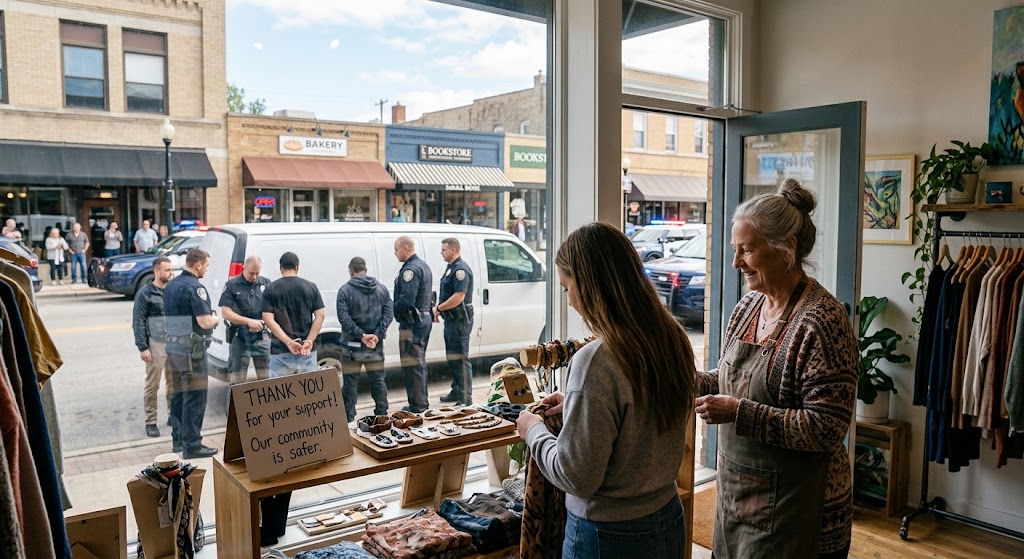
“When a big-box chain loses $10,000 in inventory, it shows up as a minor footnote on a quarterly earnings report,” Morales said. “When a family-owned store loses $10,000, it wipes out our entire operating margin for the quarter, jeopardizes our payroll, and makes our insurance unaffordable. For us, organized crime isn’t a nuisance—it is an existential crisis.”
Stories like Morales’s have become alarmingly common across commercial corridors worldwide.While national headline coverage has predominantly focused on major retail conglomerates closing flagship locations or locking everyday items behind plastic display cases, the most severe damage from Organized Retail Crime (ORC) has quietly hit Main Street.
In response to mounting public outcry and billions of dollars in economic losses, law enforcement agencies, state attorneys general, and federal authorities have launched an unprecedented wave of targeted crackdowns on retail theft rings.Through specialized multi-jurisdictional task forces, enhanced statutory penalties, and aggressive enforcement against illicit online fencing networks, prosecutors are shifting their focus from casual shoplifters to professional criminal syndicates.
For small business owners, this policy pivot offers critical relief, but it also brings a complex set of operational adjustments, shifting security costs, and new local economic realities.
The Asymmetric Burden of Organized Theft
To understand the impact of law enforcement crackdowns, it is essential to distinguish between opportunistic shoplifting and organized retail crime.Opportunistic shoplifting typically involves an individual stealing a small quantity of goods for personal consumption or immediate resale.Organized retail crime, by contrast, is a structured commercial enterprise.
ORC syndicates operate through a division of labor:
- Boosters:Professional thieves who execute planned, high-volume thefts targeting specific, high-demand merchandise.
- Fences:Mid-level operators who consolidate stolen goods, clear tracking tags, and aggregate inventory in warehouses or storage facilities.
- Distributors:High-level brokers who liquidate the stolen inventory through online marketplaces, flea markets, or illegitimate wholesale supply chains.
National enterprise chains possess corporate security divisions, advanced loss-prevention software, and self-insured capital reserves to buffer these hits.Independent merchants operate with far thinner margins and no such safety nets.
When an ORC ring targets an independent boutique, pharmacy, hardware store, or specialty shop, the financial shock propagates instantly across the business.Beyond the direct loss of physical stock, small retailers face compounding indirect costs.Emergency repairs for smashed storefront glass, urgent security guard hiring, soaring commercial liability insurance premiums, and lost revenue from empty shelves can swiftly push an otherwise solvent small enterprise into insolvency.
Furthermore, the human toll on small business staff has been severe.Retail surveys consistently show a sharp rise in aggression and violence associated with organized theft operations.Small store employees, often working in teams of just two or three per shift, face frightening confrontations.This environment breeds high employee turnover and chronic staffing shortages, further destabilizing local businesses.
Anatomy of the Crackdown: Dismantling the Illicit Supply Chain
For years, local law enforcement responses to retail theft were hampered by statutory limitations, low priority rankings, and a failure to look beyond the immediate crime scene. Arresting a “booster” at the store door did little to stop the broader enterprise, as crime rings simply replaced low-level thieves within hours.
The current crackdown represents a fundamental shift in strategy: treating organized retail theft as a form of transnational financial crime and racketeering.
State Task Forces and Multi-Agency Operations
Over forty states have established dedicated Organized Retail Crime Associations (ORCAs) and specialized task forces within state attorney general offices.These task forces pool resources across state police, local precincts, district attorneys, and federal agencies like the Department of Homeland Security.
By aggregating individual theft reports across multiple municipal jurisdictions, investigators can trace patterns, identify common fencing operations, and construct complex conspiracy and felony charges that carry substantial prison sentences.
Cutting off the Digital Fence
A pivotal component of the crackdown has been legislative and regulatory pressure on online marketplaces.The federal INFORM Consumers Act requires major e-commerce platforms to verify and disclose key bank, tax, and contact information for high-volume third-party sellers.
By stripping away the anonymity that previously allowed illicit fences to sell stolen bulk merchandise online under the guise of legitimate liquidators, law enforcement has severely disrupted the monetization phase of the theft pipeline.
Statutory Reforms and Felony Threshold Adjustments
Across numerous jurisdictions, lawmakers have updated legal codes to allow prosecutors to aggregate the financial value of multiple thefts committed over a set period.Previously, a thief who stole $800 worth of merchandise from five different stores in a single day faced five separate misdemeanor charges.Under aggregated value statutes, those incidents are combined into a single grand larceny felony charge, providing prosecutors with the leverage needed to secure cooperation and target higher-level syndicate ringleaders.
Direct Benefits for Small Merchants
The tangible effects of these coordinated crackdowns are beginning to resonate across local commercial districts, offering small businesses much-needed operational stability.
Stabilization of Inventory and Shrink
For small merchants operating on 3% to 5% net profit margins, stopping chronic inventory loss directly protects the bottom line.Retail associations report that targeted task force raids on major urban fencing hubs have led to measurable drops in repeat theft incidents in surrounding commercial corridors.When law enforcement dismantles a regional fence, the local demand for stolen goods dries up temporarily, affording nearby merchants a reprieve.
Restoring Fair Market Competition
Organized theft rings do not merely steal goods; they disrupt the broader retail economy by creating an illicit shadow market.Fences frequently resell stolen cosmetics, designer apparel, power tools, and baby formula online at prices 40% to 60% below wholesale costs.
Legitimate small business owners—who pay wholesale prices, commercial rent, business taxes, and employee benefits—cannot compete with illicit vendors selling stolen inventory.By shutting down illicit digital storefronts and warehouse resellers, crackdowns help restore fair pricing dynamics.
Rebuilding Insurance Market Viability
The surge in organized theft over recent years triggered severe tightening in the commercial property and casualty insurance market.Small business owners reported steep deductible increases, restricted coverage terms, or complete policy cancellations following theft claims.As task force operations successfully reduce localized crime rates and demonstrate measurable prosecution outcomes, commercial insurers have begun stabilizing rate hikes for small business policyholders in monitored business districts.
Workplace Safety and Staff Retention
When store owners can demonstrate that local authorities actively investigate and prosecute organized retail crime, employee morale improves.Decreasing the frequency of aggressive group thefts creates a safer physical workplace, reducing stress-induced employee churn and lowering worker compensation claims related to workplace violence.
Residual Friction and Unintended Consequences
While the intensification of anti-theft enforcement has yielded positive outcomes, it has also introduced new operational friction and indirect costs for small business owners.
The Security Capital Trap
To support law enforcement investigations, police departments and prosecutors increasingly expect merchants to provide high-definition video footage, digital transaction logs, and clear time-stamped evidence.Major corporate retailers can easily deploy artificial intelligence-powered camera arrays and automated loss-prevention software.For small business owners, purchasing and maintaining advanced digital surveillance systems represents a heavy capital expenditure.
Furthermore, many small merchants have felt compelled to adopt physical security measures—such as locking up high-value merchandise, restricting store entry points, or hiring private security guards.While these measures deter theft, they also create friction for legitimate shoppers, lowering foot traffic and reducing impulse purchases.
SMALL BUSINESS IMPACT MATRIX

Direct Positive Impacts:
* Reduced inventory shrink and stabilized cash flow
* Elimination of unfair competition from illicit resellers
* Improved employee safety and morale
* Long-term stabilization of commercial insurance rates

Operational Challenges:
* High capital costs for security technology upgrades
* Administrative burden of documenting multi-jurisdictional evidence
* Customer friction caused by locked display cases and access controls
* Crime displacement to suburban and rural small-town districts
The Geographic Displacement Effect
A well-documented phenomenon in criminology is spatial displacement: when law enforcement heavily concentrates resources on high-profile urban shopping corridors, professional crime rings simply shift their operations to softer targets.
As major metropolitan police departments establish dedicated ORC units, organized theft syndicates have increasingly targeted small businesses in suburban and rural jurisdictions.These smaller municipal police departments often lack specialized investigative units, crime analysts, or the budget required to pursue long-term conspiracy cases that cross county or state lines.
The Administrative Evidentiary Burden
Under newly established multi-agency task force frameworks, prosecuting organized crime requires extensive documentation to prove criminal conspiracy and meet felony financial thresholds.Small business owners often find the reporting process time-consuming.Cataloging stolen item serial numbers, pulling security footage, filing detailed police reports, and testifying at grand jury proceedings require store owners to step away from daily commercial operations, creating a hidden administrative toll.
The Road Ahead: Public-Private Alliances and Policy Outlook
As the landscape of organized retail crime continues to evolve, maintaining momentum against theft rings will depend on deepening structural collaboration between the public and private sectors.
Independent business communities are increasingly forming regional cooperative networks to bridge the resource gap.Local business improvement districts (BIDs) and merchant associations are pooling funds to install shared perimeter security cameras, contract roving private patrols, and utilize secure, real-time messaging platforms to alert neighboring store owners when a suspected theft ring is active in the area.
Simultaneously, federal legislative efforts aim to standardize cross-jurisdictional responses.Proposed bipartisan measures, such as the Combating Organized Retail Crime Act, seek to establish a centralized federal coordination center within the Department of Homeland Security.This initiative would streamline information sharing between federal law enforcement, state prosecutors, and small business networks, ensuring that multi-state theft rings can no longer exploit jurisdictional boundaries.
For Main Street, the crackdown on organized retail theft is ultimately about more than safeguarding physical merchandise.It is about preserving the economic vitality, safety, and character of local communities.While law enforcement task forces have made significant strides in dismantling high-level fencing syndicates, long-term success will require sustained investment, equitable access to security infrastructure, and persistent policy focus to ensure that small businesses can operate safely and profitably.
Leave a Reply