
Receiving an official document bearing a court seal can be an intimidating experience. For most citizens, an encounter with the local criminal justice system occurs not as a defendant or a juror, but as a witness. Whether you personally observed a traffic collision, overheard a dispute, processed a business transaction, or possessed key background information, receiving a subpoena means your testimony has been identified as essential evidence in a pending court case.
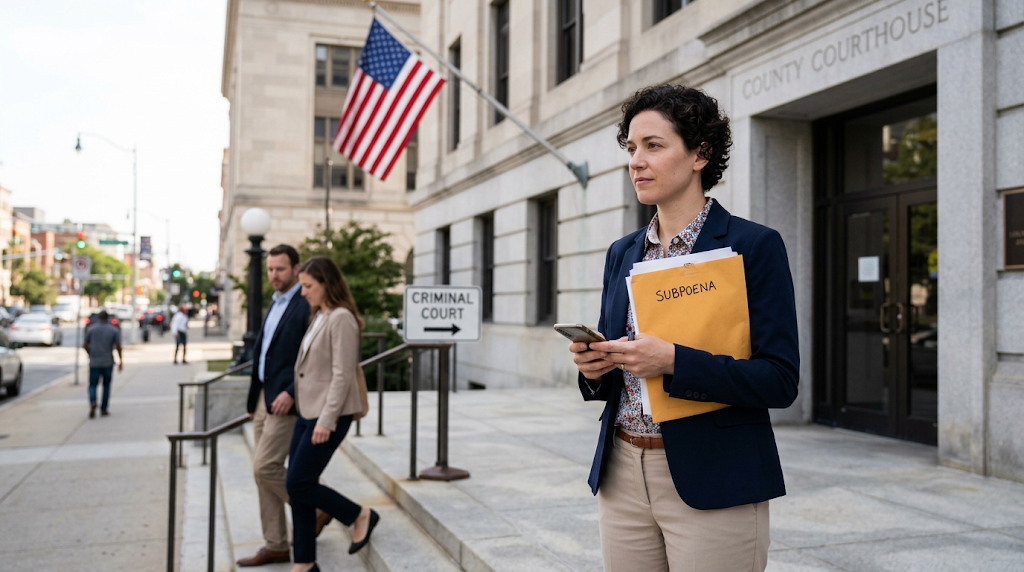
A court subpoena is far more than a request for information; it is a binding legal order. Navigating the process requires an understanding of what the document entails, how to prepare for a court appearance, what happens inside the courtroom, and the legal obligations and protections afforded to witnesses.
Understanding the Subpoena: A Legal Command, Not an Invitation
At its core, a subpoena is a formal order issued by a court—or by an attorney acting as an officer of the court—requiring an individual to participate in a legal proceeding. In local criminal matters, which are typically prosecuted in municipal, district, or county courts, subpoenas generally fall into one of two categories:
- Subpoena Ad Testificandum: The most common form of subpoena, ordering an individual to appear in court at a specified date and time to provide oral testimony under oath.
- Subpoena Duces Tecum: An order requiring an individual to appear and bring specific physical evidence, documents, photographs, digital records, or logs relevant to the case.
Who Issued the Subpoena?
A subpoena will clearly state which party requested your appearance. In a criminal trial, this is either the prosecution—representing the government (such as the state, county, or municipal prosecutor’s office)—or the defense, representing the accused individual.
Understanding who summoned you provides context regarding the types of questions you will likely face, though your legal duty to provide truthful answers remains identical regardless of which side issued the order.
The Consequences of Non-Compliance
Ignoring a subpoena is not an option. Because it is a direct court order, failing to appear without a legally valid excuse can result in significant legal penalties. A judge may issue a bench warrant for your arrest, hold you in civil or criminal contempt of court, and impose fines or brief periods of incarceration.
If an unexpected emergency, severe illness, or major conflict arises that prevents you from appearing on the scheduled date, you must immediately contact the issuing attorney or court clerk listed on the subpoena rather than simply failing to show up.
Pre-Trial Preparation: What Happens Before the Court Date
In the weeks or days leading up to the trial, the process begins long before you walk through the courthouse doors.
Contacting the Issuing Attorney or Coordinator
Subpoenas typically include the contact information for the attorney who requested your testimony, as well as details for a victim-witness advocate or case coordinator. It is standard practice to contact this office upon receiving the document. The coordinator can confirm trial schedules, provide logistical information regarding parking and courtroom locations, and update you if trial dates are postponed or rescheduled—a common occurrence in municipal and county court systems.
Pre-Trial Conferences
Before trial, the attorney who subpoenaed you may request a brief meeting, known as a pre-trial witness conference. During this session, the attorney will typically:
- Review previous statements you gave to police officers or investigators.
- Explain the legal issues relevant to your expected testimony.
- Preview the types of questions they intend to ask on the witness stand.
- Prepare you for potential lines of questioning from opposing counsel.
It is important to understand that a pre-trial conference is meant to review facts and familiarize you with courtroom procedure, not to tell you what to say. Attorneys are legally and ethically prohibited from coaching witnesses to alter their memory or manufacture testimony.
Refreshing Your Memory
If you gave a written statement, recorded an interview, or filled out a police report following the incident, ask to review those materials prior to trial. Criminal trials often take place months—or even years—after the events in question occurred. Reviewing your prior statements helps refresh your memory and ensures your courtroom testimony remains consistent with what you reported at the time.
The Day of the Trial: Arrival and Courtroom Protocol
On the day of the trial, arriving early is essential. Courthouses enforce strict security measures, including metal detectors and bag screenings, which can cause delays during morning rush hours.
Dress Code and Demeanor
While formal business attire is rarely mandatory, witnesses are expected to dress respectfully to preserve the decorum of the court. Conservative, clean attire—such as slacks, a button-down shirt, a blouse, or a modest dress—is recommended. Items such as hats, shorts, graphic t-shirts, and flip-flops are generally discouraged or prohibited by courtroom dress codes.
The Witness Waiting Area and Sequestration
Upon arriving at the designated courtroom, report your presence to the court bailiff, prosecutor’s staff, or defense assistant. In many criminal trials, judges invoke a procedural rule known as witness sequestration (often referred to as “The Rule on Witnesses”).
Under sequestration orders:
- Witnesses are excluded from the courtroom while other testimony is being presented.
- Witnesses must wait in designated hallway areas or witness rooms until called to testify.
- Witnesses are strictly prohibited from discussing their testimony, the evidence, or the case with other witnesses before or after they testify.
Sequestration prevents witnesses from subconsciously or intentionally tailoring their testimony to match or contradict what earlier witnesses have said.
Taking the Stand: The Examination Process
When your name is called, a bailiff or court officer will escort you into the courtroom and lead you to the witness stand, typically located adjacent to the judge’s bench.
Swearing the Oath
Before taking a seat, you will be required to raise your right hand and take an oath or solemn affirmation to tell the truth, the whole truth, and nothing but the truth. Administered by the court clerk or judge, this oath carries legal weight: providing false statements under oath constitutes perjury, a criminal offense punishable by fines and imprisonment.
Direct Examination
The attorney who subpoenaed you will conduct the first round of questioning, known as direct examination.
- Direct examination typically begins with basic background questions (your name, occupation, and relationship to the case).
- Questions are open-ended (e.g., “What did you observe on the evening of June 12th?”) designed to allow you to explain the facts in your own words.
- The attorney aims to establish the facts that support their side of the case.
Cross-Examination
Once direct examination concludes, the opposing attorney has the right to conduct cross-examination.
- Cross-examination is designed to test the accuracy, reliability, memory, and credibility of your testimony.
- Unlike direct examination, opposing counsel may use leading questions—questions that suggest a specific answer (e.g., “Isn’t it true that the streetlights were off when you looked out the window?”).
- The opposing attorney may challenge discrepancies between your courtroom statements and earlier police reports, question your vision or distance from the event, or explore potential personal biases.
While cross-examination can feel adversarial or uncomfortable, it is a fundamental component of the constitutional right to confront witnesses. Maintaining a calm, professional demeanor and answering questions directly without becoming defensive is the most effective approach.
Redirect and Re-Cross Examination
Following cross-examination, the original attorney may conduct a brief redirect examination to clarify any points that were raised or confused during cross-examination. Opposing counsel may then follow with a brief re-cross examination restricted strictly to the new matters brought up during redirect.
Essential Rules for Witnesses on the Stand
To navigate testimony smoothly and effectively, experienced trial attorneys and judicial experts recommend following several fundamental principles:
- Always Tell the Truth: Your sole obligation as a witness is complete honesty. Never adjust your answers to help or harm either side.
- Listen Carefully Before Answering: Allow the attorney to finish asking the complete question before you begin speaking. This ensures you understand what is being asked and gives opposing counsel time to object if necessary.
- Say “I Don’t Know” or “I Don’t Recall” When Applicable: Never guess, speculate, or manufacture details. If you do not know the answer or cannot remember a specific detail, state so clearly. Speculation undermines your overall credibility.
- Stop Speaking Immediately if an Objection is Raised: If an attorney says “Objection,” stop speaking mid-sentence. The judge will rule on whether the question is permissible under the rules of evidence. If the judge “sustains” the objection, the question cannot be answered. If the judge “overrules” the objection, you may answer.
- Request Clarification if Needed: If a question is confusing, double-barreled, or unclear, ask the attorney or judge to rephrase it.
- Address the Fact-Finder: Speak clearly and direct your answers toward the jury (in a jury trial) or toward the judge (in a bench trial), as they are responsible for weighing the evidence.
Rights, Protections, and Special Considerations
Witnesses retain important legal rights throughout the trial process.
Protection Against Self-Incrimination
Under the Fifth Amendment to the United States Constitution (and similar provisions in state and international jurisdictions), a witness cannot be compelled to give testimony that would incriminate themselves in a criminal offense. If answering a question could expose you to criminal liability, you have the right to assert your Fifth Amendment privilege, ideally after consulting with independent legal counsel.
Witness Fees and Expenses
In many jurisdictions, witnesses subpoenaed for criminal court proceedings are entitled to a modest statutory witness fee, as well as reimbursement for mileage or travel expenses. These fees are set by statute and distributed by the clerk of court or the issuing government agency.
Protection from Employer Retaliation
Most state laws prohibit employers from firing, demoting, threatening, or disciplining an employee for taking time off work to comply with a court subpoena. However, witnesses should provide their employer with a copy of the subpoena as far in advance as possible to document the mandatory court appearance.
After You Testify: Leaving the Bench
Once all rounds of questioning are complete, the judge will formally excuse you from the witness stand.
Before leaving the courtroom, the judge will inform you whether you are permanently excused or remain subject to recall. If permanently excused, your legal obligation under the subpoena is complete, and you are free to leave the courthouse.
If witness sequestration remains in effect for the rest of the trial, you must avoid discussing what happened on the witness stand with individuals who have not yet testified.
While testifying as a witness in a local criminal court can be nerve-wracking, the judicial system relies on civic participation to function. By understanding the timeline, adhering to court etiquette, and committing to truthful testimony, witnesses play an essential role in ensuring a fair outcome under the law.
Leave a Reply