
For millions of adolescents around the world, the arrival of summer marks a long-awaited release from the rigid bounds of the academic calendar. It promises warmer weather, extended daylight, and weeks of unstructured leisure. Yet for law enforcement agencies, municipal leaders, criminologists, and community advocates, June, July, and August represent the most precarious quarter of the year.
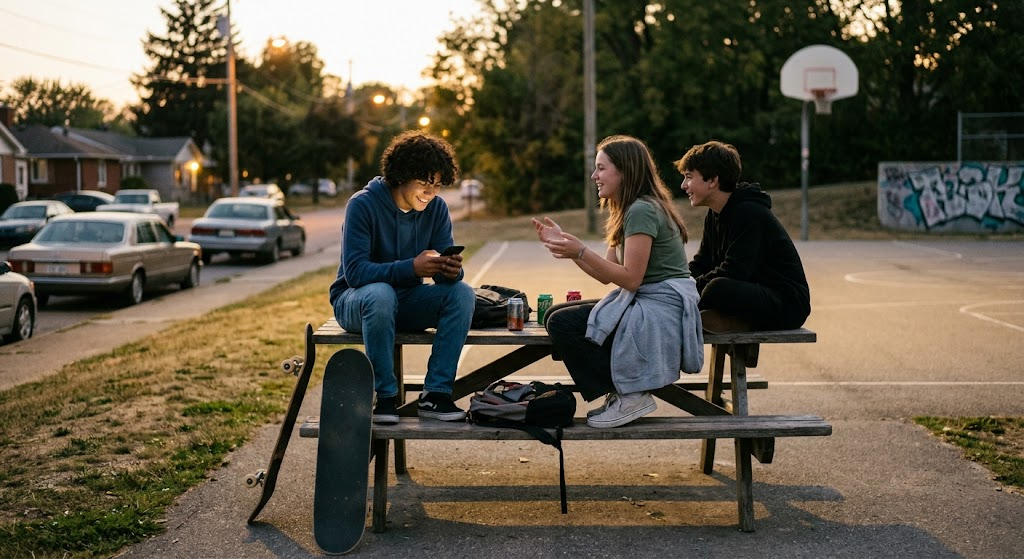
Decades of empirical research across urban, suburban, and rural jurisdictions consistently reveal a clear seasonal pattern: juvenile crime rates rise sharply during the summer months. Statistical analyses of municipal police data demonstrate notable surges in property theft, motor vehicle break-ins, vandalism, curfew violations, and violent altercations involving teenagers when schools close for the break.
This seasonal uptick in adolescent delinquency is neither accidental nor an unalterable rite of passage. Rather, it is the predictable outcome of converging social, physiological, environmental, and structural factors. Understanding why youth crime surges during the summer requires examining how the absence of structured daily routines, the biology of heat and daylight, peer group dynamics, and systemic gaps in community investment interact to create ideal conditions for juvenile offense.
The Loss of Structure and the Mechanics of Opportunity
To explain the summer spike in youth crime, criminologists frequently point to Routine Activity Theory, a foundational framework developed by sociologists Lawrence Cohen and Marcus Felson. The theory posits that a crime occurs whenever three distinct elements converge in time and space: a motivated offender, a suitable target, and the absence of a capable guardian.
During the academic year, the school system functions as a massive institutional mechanism of structural time management and informal social control. For upwards of seven hours a day, five days a week, millions of teenagers are grouped in supervised environments. Schools mandate attendance, enforce behavioral norms, and provide adult oversight through teachers, administrators, counselors, and coaches. Furthermore, homework, athletic practices, and extracurricular clubs occupy much of the late afternoon and early evening.
When the school year ends, that protective scaffolding effectively vanishes overnight. Millions of adolescents suddenly possess ten to twelve hours of unstructured, unsupervised time each day. In households where parents or guardians work full-time jobs, teenagers are frequently left without direct adult supervision during peak daytime hours.
This sudden vacuum of structured activity dramatically increases the likelihood that potential young offenders will encounter suitable targets in settings devoid of capable guardians. Unsupervised teenagers congregated in public parks, shopping corridors, transit hubs, or residential neighborhoods are more exposed to opportunities for mischief, property damage, and peer-driven experimentation that can escalate into formal criminal behavior.
Extended Daylight and the Heat-Aggression Hypothesis
While the loss of academic structure accounts for much of the increase in daytime youth gatherings, environmental factors play a complementary role in shaping summer crime patterns—particularly during the evening hours.
Extended summer daylight hours alter the temporal rhythm of community life. Youth are able to remain outdoors far later into the night than during the winter or spring. This prolonged visibility and outdoor activity expand the operational window during which adolescents interact away from the home, increasing potential touchpoints for inter-group conflict, trespassing, and substance use.
Simultaneously, environmental psychologists and biometric researchers have long documented the correlation between elevated temperatures and aggressive behavior, a phenomenon known as the heat-aggression hypothesis. Higher ambient temperatures trigger subtle physiological shifts in the human body, including elevated heart rates, increased cortisol levels, and heightened sympathetic nervous system arousal.
In developing adolescent brains—where the prefrontal cortex responsible for impulse control, risk assessment, and emotional regulation is not yet fully matured—these thermal stressors can significantly lower the threshold for frustration, irritability, and violent reaction. Minor interpersonal slights, trivial territorial disputes, or playful teasing that might be shrugged off in cooler months are more prone to escalate into physical fights or weapon involvement under the physical discomfort of oppressive summer heatwaves.
Peer Contagion and the Rise of Co-Offending
Adolescent delinquency differs fundamentally from adult criminality in its deeply social nature. While adult offenses are overwhelmingly committed by individuals acting alone, juvenile offenses are overwhelmingly group phenomena. Criminologists refer to this as “co-offending.”
During the summer, the social landscape of youth undergoes a geographic consolidation. Free from assigned classrooms and neighborhood school boundaries, teenagers congregate in larger, more fluid peer groups at public beaches, commercial plazas, community parks, and street corners.
In these group settings, psychological mechanisms such as peer contagion, deindividuation, and status-seeking become amplified. Adolescents are biologically hardwired to prioritize peer approval and social standing over long-term consequences. Within an unsupervised summer peer group, a single risk-tolerant individual can quickly alter the collective norm, encouraging others to participate in daring or illegal acts—such as shoplifting, trespassing onto private property, joyriding, or engaging in street fights—that none of the individuals would attempt alone.
In recent years, the ubiquity of smartphones and social media platforms has accelerated this peer-driven dynamic. Digital networks allow large groups of teenagers to coordinate impromptu gatherings—often referred to as “street takeovers” or “flash mobs”—in real time. What begins as a viral online invitation to hang out at a downtown retail district or public waterfront can attract hundreds of teenagers within hours, overwhelming local infrastructure and creating volatile environments where property theft and chaotic altercations easily erupt.
Socioeconomic Disparities and the Summer Opportunity Gap
The impact of the summer youth crime surge is not distributed equally across all zip codes. Comparative municipal data shows that under-resourced urban neighborhoods experience significantly higher rates of summer juvenile delinquency and victimization than affluent suburban communities.
This divergence highlights what policy analysts term the “summer opportunity gap.” In higher-income communities, parents often fill the summer vacation gap by enrolling teenagers in fee-based specialized camps, sports clinics, academic enrichment programs, travel teams, or paid internships. These structured, adult-supervised activities effectively replicate the protective routines of the school year.
Conversely, in socioeconomically disadvantaged neighborhoods, families rarely have the disposable income required to afford private summer programming. At the same time, municipal budget cuts in many cities have led to reduced operating hours for public community centers, swimming pools, libraries, and park facilities.
When low-income teenagers face three months without accessible recreational infrastructure, positive youth development programs, or legitimate employment opportunities, the street corner often becomes the default venue for socialization. The lack of constructive economic and recreational outlets leaves young people particularly vulnerable to recruitment by older criminal networks, gang activity, and illicit street economies that thrive in neglected public spaces.
Evaluating Policy Responses: Suppression Versus Opportunity
Faced with annual summer spikes in youth crime, city governments and law enforcement agencies historically defaulted to punitive suppression tactics. These strategies often include strict juvenile curfew ordinances, increased police patrols in designated high-crime corridors, zero-tolerance enforcement for minor infractions, and aggressive dispersal of public youth gatherings.
However, a growing body of criminological research suggests that reliance on punitive suppression yields mixed results at best and counterproductive outcomes at worst. Strict curfew enforcement, for instance, frequently shifts juvenile criminal activity to non-curfew hours or adjacent neighborhoods rather than reducing overall incidence rates. Moreover, heavy-handed police encounters with non-violent youth can erode community trust, accelerate justice-system involvement, and fail to address the root causes driving delinquency.
In response, progressive newsrooms, policy experts, and municipal leaders are increasingly championing evidence-based interventions that focus on opportunity creation rather than criminalization.
Chief among these effective interventions are Summer Youth Employment Programs (SYEP). Longitudinal studies conducted in major metropolitan areas—including Chicago, New York City, and Philadelphia—have demonstrated that providing teenagers with paid, structured summer jobs leads to dramatic, lasting reductions in violent crime involvement.
By offering adolescents twenty to thirty hours a week of supervised workplace activity, legal income, and mentorship, youth employment initiatives simultaneously address all three components of Routine Activity Theory: they reduce unstructured time, place youth under positive adult guardianship, and provide financial resources that diminish economic incentives for illicit behavior.
Similarly, communities that invest in “extended-hour” youth programs—such as keeping public schools, recreation centers, and night-basketball leagues open late into summer evenings—report measurable drops in juvenile arrests and emergency room visits related to youth violence. These non-punitive approaches recognize that teenagers do not cease needing safe, engaging environments simply because school is out of session.
A Predictable Challenge Requiring Proactive Solutions
The seasonal spike in teen criminal activity during summer months is a complex sociological challenge, but it is not an unsolvable mystery. It is the natural byproduct of taking millions of developing individuals, removing their primary daily structure, increasing their exposure to ambient environmental stressors, and leaving them to navigate public spaces without adequate adult guidance or constructive activities.
Viewing summer juvenile crime purely through the lens of law enforcement misses the fundamental broader picture. The annual surge is an indicator of systemic structural gaps in how societies support young people during non-academic periods.
Addressing this phenomenon requires a comprehensive, cross-sector approach that aligns public safety, education, municipal planning, and workforce development. When cities treat the summer months not merely as a period of institutional absence, but as an opportunity to invest in robust youth programming, paid employment, and accessible public infrastructure, the summer spike ceases to be an inevitable crisis—and becomes a manageable, preventable transition.
Leave a Reply