
For nearly half a century, the architectural symbol of community vigilance across American and European suburbs was a simple metal sign bolted to a streetlight pole: a dark silhouette of a figure in a trench coat and fedora, encircled by the bold lettering of “Neighborhood Watch.”Born in the 1970s under the stewardship of the National Sheriffs’ Association, the traditional neighborhood watch relied on physical block captains, monthly church-basement meetings, paper rosters, and telephone trees.Neighbors were encouraged to look out their front windows, keep their porch lights on, and dial police when something seemed amiss.
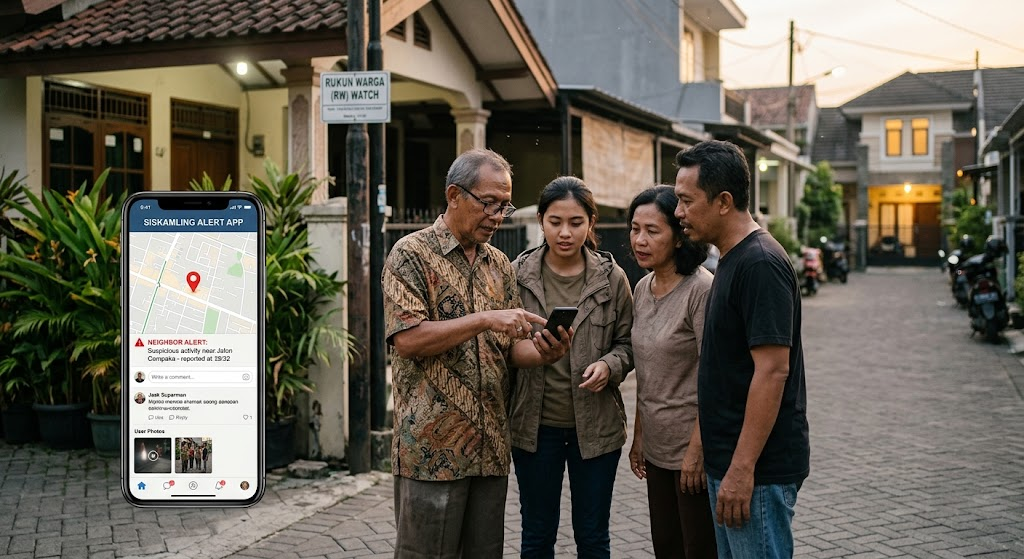
Today, that iconic metal sign is rapidly being replaced by a digital infrastructure embedded directly in the palms of residents’ hands.
Driven by the explosive adoption of smartphones, affordable high-definition home security cameras, and specialized hyper-local software, community safety has migrated from physical street patrols to real-time digital ecosystems.Platforms like Nextdoor, Ring’s Neighbors app, Citizen, and encrypted messaging networks such as WhatsApp have fundamentally re-engineered how neighbors communicate, monitor their surroundings, and interact with law enforcement.
This digital revolution has democratized public safety monitoring, offering unprecedented speed, connectivity, and evidence-gathering capabilities.Yet, as millions of citizens transform into round-the-clock digital sentinels, sociologists, legal scholars, and law enforcement executives warn that the digitized neighborhood watch carries profound unintended consequences—amplifying urban anxiety, accelerating lateral surveillance, triggering racial profiling, and blurring the boundary between civic duty and digital vigilantism.
From Street Patrols to Push Notifications: The Digital Migration
The shift from analog neighborhood watches to application-based safety networks represents one of the most rapid transformations in modern civic engagement.In the late 20th century, participation in a neighborhood watch required a significant investment of time. Residents attended organized meetings, coordinated evening patrol shifts, and manually distributed flyers regarding recent vehicle break-ins or burglaries.
As civic participation declined nationwide in the early 2000s, traditional watch programs stagnated.However, the vacuum was swiftly filled by the arrival of consumer-facing safety technologies.
THE EVOLUTION OF NEIGHBORHOOD VIGILANCE

1970s–1990s: Traditional Watch
[Street Signs & Decals] ---> [Monthly Block Meetings] ---> [Landline Phone Trees]

2000s–2010s: Early Web Communities
[Email ListServs] ---> [Community Web Forums] ---> [Facebook Neighborhood Groups]

2020s–Present: Real-Time Mobile Networks
[HD Video Doorbells] ---> [AI Alert Apps (Citizen/Neighbors)] ---> [Instant Push Alerts]
The migration occurred across three distinct waves:
- The Forum Era (Late 2000s): Neighborhoods began establishing Yahoo Groups, email listservs, and Facebook groups to post localized announcements. While faster than physical flyers, communication remained asynchronous and fragmented.
- The Platform Era (2010s):Purpose-built hyper-local networks like Nextdoor emerged, verifying user addresses to create secure, geographically bounded social networks.Nextdoor transformed neighborhood chatter into organized categories, dedicating specific feeds to safety alerts, lost pets, and municipal updates.
- The Sensor and Algorithmic Era (Present):The pairing of smart video doorbells—pioneered by Amazon’s Ring and Google’s Nest—with real-time safety software like Citizen created a continuous, automated surveillance grid.
Instead of waiting for a bi-weekly neighborhood watch newsletter, modern residents receive instant, geofenced push notifications detailing incidents happening within yards of their front doors.
The Mechanics of the Modern Alert Ecosystem
The contemporary digital neighborhood watch is built on an interconnected array of consumer hardware, software algorithms, and crowdsourced data streams.Unlike the subjective observations of traditional block watches, today’s digital alerts are frequently backed by high-definition video, audio recordings, and precise GPS telemetry.
| Operational Metric | Traditional Neighborhood Watch | Modern Mobile Alert App Ecosystem |
| Primary Communication | Physical meetings, phone chains, flyers | Instant push notifications, video feeds, live chat |
| Data Verification | Eye-witness accounts, physical observation | HD video clips, police scanner audio, automated GPS |
| Geographic Scope | Single street block or subdivision | Dynamically scaled radii (1 to 5-mile custom alerts) |
| Response Speed | Hours to days following an event | Seconds to minutes during an ongoing incident |
| Police Interaction | Direct liaison officer meetings | Digital evidence portals, automated agency feeds |
1. Crowdsourced Video Sharing Platforms
Apps like Ring’s Neighbors leverage millions of outward-facing residential cameras.When a homeowner captures footage of a package theft, an attempted vehicle break-in, or a suspicious trespasser, they can upload the clip directly to the app’s localized feed.Surrounding households receive an immediate alert, complete with timestamped video, allowing neighbors to compare notes, identify recurring suspects, and track physical movement across an entire development.
2. Scanner Scraping and Geofenced Emergency Tracking
Platforms like Citizen take crowdsourcing a step further by actively monitoring 911 dispatch radio channels, emergency services communications, and user reports in major metropolitan areas.Using artificial intelligence and human content moderators, the app transcribes emergency dispatch audio into real-time text alerts, placing red warning dots on an interactive map.Users in the immediate vicinity receive pings alerting them to active police operations, structural fires, or reports of hazardous situations, encouraging nearby residents to contribute live video streams from the scene.
3. Hyper-Local Messaging Networks
In many communities, particularly across international markets, informal WhatsApp and Telegram safety groups serve as the backbone of neighborhood vigilance.These end-to-end encrypted chat groups allow street-level blocks to operate like localized radio channels.If a resident notices an unfamiliar delivery van idling excessively or an open garage door late at night, a single message instantly reaches dozens of immediate neighbors.
4. Integration with Private Automated Infrastructure
Beyond smartphones and doorbells, Homeowners Associations (HOAs) and community improvement districts are increasingly integrating enterprise-grade technology into their digital watch arsenals. The most prominent example is the rapid adoption of Automated License Plate Reader (ALPR) camera networks, such as those manufactured by Flock Safety. Installed at subdivision entrances, these cameras capture plate details, vehicle colors, and unique physical characteristics, instantly alerting both resident watch committees and local police departments if a vehicle tagged in a state or national crime database enters the neighborhood.
The Double-Edged Sword: Paranoia, Bias, and Digital Vigilantism
While the technological evolution of the neighborhood watch offers undeniable improvements in operational efficiency, criminologists and sociologists caution that it introduces severe systemic risks.By converting routine neighborhood activities into a continuous stream of crime alerts, digital watch platforms can accidentally erode the very sense of safety they claim to build.
The “Echo Chamber of Fear”
In traditional neighborhood watch models, residents met occasionally, evaluated verified incidents, and moved on with their daily lives.Digital safety apps, by contrast, employ engagement-driven notification systems designed to capture user attention.
When every loud noise, lost pet, delayed delivery driver, or minor verbal argument triggers a high-priority smartphone notification, residents enter a state of hyper-vigilance.Criminological studies show a growing disconnect between actual crime rates—which have historically plummeted across many residential suburban sectors—and public perceptions of crime, which remain artificially high due to the constant feedback loop of safety app notifications.
“Crime watch apps provide information that is raw, unfiltered, and transmitted continuously,” notes Dr. Sarah Lageson, a sociologist specializing in technology and criminal justice.“Instead of building genuine community trust, an unmanaged stream of safety alerts can transform a quiet suburban street into a landscape of imagined threats, where every stranger is viewed with immediate suspicion.”
Systemic Bias and Racial Profiling
The most persistent critique of digital neighborhood watch platforms is their capacity to facilitate automated racial profiling and lateral surveillance.On platforms like Nextdoor and Ring’s Neighbors, historically, a significant volume of user-submitted “suspicious activity” posts targeted individuals solely on the basis of race, dress, or unfamiliarity.
Delivery workers, door-to-door utility inspectors, real estate agents, and minority youth walking through non-diverse neighborhoods have routinely found their photographs uploaded to local safety boards tagged as “suspicious persons.”Civil rights advocates emphasize that when these biased posts trigger panicked calls to emergency dispatchers, they create volatile situations that put innocent citizens in physical danger from law enforcement responses.
THE CYCLE OF ALGORITHMIC PARANOIA

[Unfamiliar Individual Enters Neighborhood]
                   │
                   ▼
[Camera Captures Motion / User Takes Photo]
                   │
                   ▼
[Unfiltered Upload to Safety App with "Suspicious" Tag]
                   │
                   ▼
[Push Notification Sent to Hundreds of Nearby Phones]
                   │
                   ▼
[Panic-Driven Comments & Escalated 911 Calls Issued]
                   │
                   ▼
[Heightened Community Anxiety & Misallocated Police Resources]
The Risk of Digital Vigilantism
The immediate speed of mobile alert apps can occasionally outpace police response capabilities, leading frustrated or overzealous residents to take enforcement into their own hands.
In multiple documented instances, real-time alerts detailing stolen bicycles or vehicle break-ins have prompted app users to arm themselves, pursue suspects through neighborhood streets, or post unverified personal identifying information (doxxing) online. When a digital crowd misidentifies a suspect, the resulting online harassment or physical confrontation can cause severe harm to innocent bystanders.
Law Enforcement Partnerships and the Privacy Recoil
The evolution of digital neighborhood watch apps has also redefined how municipal police departments interact with the communities they serve.Initially, law enforcement agencies enthusiastically embraced platforms like Ring’s Neighbors and Nextdoor as free, highly effective evidence-gathering tools.
Throughout the late 2010s, thousands of police departments established formal partnerships with tech providers.These arrangements allowed law enforcement agencies to post official crime alerts directly to local app feeds and utilize specialized law enforcement portals to issue geographic requests asking camera owners for voluntary video submissions following nearby crimes.
However, this frictionless pipeline between private home surveillance networks and public police databases drew intense pushback from privacy rights organizations, civil liberties advocates, and constitutional scholars.Critics argued that corporate partnerships were effectively creating a decentralized, warrant-free government surveillance grid funded by private consumers.
In response to sustained public pressure and evolving legal frameworks regarding digital privacy, major platforms were forced to overhaul their law enforcement access policies:
- Restricting Direct Agency Portals: Amazon’s Ring officially phased out its “Request for Assistance” tool, which previously allowed law enforcement officers to request video footage directly from users within the Neighbors app. Under updated frameworks, police departments must post public requests on the app’s main feed or obtain traditional judicial search warrants to compel video access from hardware makers.
- Algorithmic Friction Controls:Platforms like Nextdoor implemented strict posting templates for safety alerts.If a user selects the “Suspicious Activity” category, the app’s software forces them to detail specific, objective behavioral acts (e.g., “trying car door handles”) rather than relying on vague physical descriptions or subjective racial indicators before the post can be published.
- Enhanced User Moderation:Modern safety apps have expanded community moderation teams and integrated natural language processing algorithms designed to flag and remove hate speech, unverified rumors, and explicit calls to illegal vigilantism.
Best Practices: Rebalancing Technology with Authentic Community
As technology continues to advance, public safety experts emphasize that mobile alert apps should serve as a secondary tool to complement—rather than replace—genuine, face-to-face community relationships.A digital network is only as healthy as the social norms established by the humans who use it.
Community leaders, law enforcement liaison officers, and urban planners recommend several key guidelines to ensure digital neighborhood watches enhance safety without destroying social cohesion:
1. Establish Clear Posting Thresholds
Neighborhood groups should establish strict internal standards regarding what constitutes a true safety alert.Minor annoyances, lost pets, sales solicitations, and unverified rumors should be kept out of high-priority safety channels.Reserving emergency alerts strictly for active, verified security threats prevents notification fatigue and keeps resident anxiety manageable.
2. Separate Emergency Alerts from Discussion Groups
Best-practice communities maintain two distinct digital communication channels: an broadcast-only announcement channel reserved for urgent safety warnings, and an open social forum dedicated to general neighborhood discussions, recommendations, and community events.This structural separation prevents panic-driven comment cascades from hijacking routine civic dialogue.
3. Require Behavior-Based Reporting
When posting about unfamiliar individuals or unusual situations, residents should adhere strictly to objective behavioral facts.A post describing “an individual trying door handles on three parked sedans at 3:00 AM” provides actionable, safety-relevant data.A post reporting “a suspicious person walking down the sidewalk” offers no actionable information while inviting subjective bias and fear.
4. Foster In-Person Connections
Technology works best when it connects people who already know and trust one another.Neighborhoods that host regular block parties, community cleanups, and in-person meetings build a foundation of social trust that reduces digital paranoia.When residents know their neighbors, they are far less likely to misinterpret routine, non-threatening behavior on a smartphone screen.
The Future: AI Integration and the Smart Neighborhood
Looking toward the coming decade, the evolution of the neighborhood watch will be driven by artificial intelligence, predictive analytics, and ambient smart-city infrastructure.
Next-generation home security systems are already deploying edge-computing AI capable of distinguishing automatically between a passing raccoon, a delivery courier placing a package on a porch, and a potential intruder attempting to force entry. Rather than sending raw, unanalyzed video clips to a neighborhood feed, future alert systems will synthesize data automatically, notifying surrounding residents only when verified, high-risk behavioral anomalies occur.
Simultaneously, the integration of smart home systems with municipal infrastructure promises to streamline emergency responses. In the event of a verified break-in or fire, automated residential networks will be capable of clearing access gates for responding fire engines, illuminating perimeter pathway lighting, and providing emergency medical technicians with real-time floor plans.
However, the core challenge of the modern neighborhood watch will remain fundamentally human.Technology can compress geographic distances, accelerate communication, and capture high-definition evidence, but it cannot manufacture social trust.The ultimate success of the digital neighborhood watch depends not on the complexity of its software, but on the wisdom, empathy, and restraint of the community using it.
Leave a Reply